


Umbria Si - L'Umbria fa per te
Check your reservations
Territory
Discover Umbria!
Click on the map to obtain detailed information about the area
Contacts
For information contact us by calling
+39 075 505 8792
or send an e-mail to info@umbriasi.it
RESTRICTED AREA FOR ACCOMMODATION PROVIDERS
Home » Città di Castello
Città di Castello Tourist Information
The Upper Tiber Valley is located in the northern reaches of Umbria. The territory is made up by cities, small towns and villages with a characteristic medieval appearance and bursting with history and art, in a perfect equilibrium between the old and the modern, between tradition and progress.
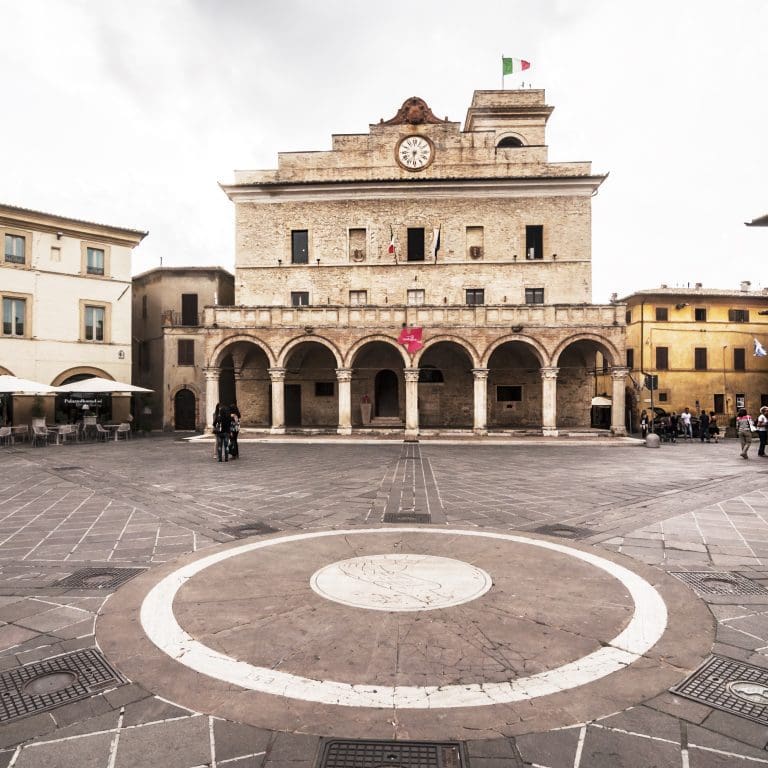
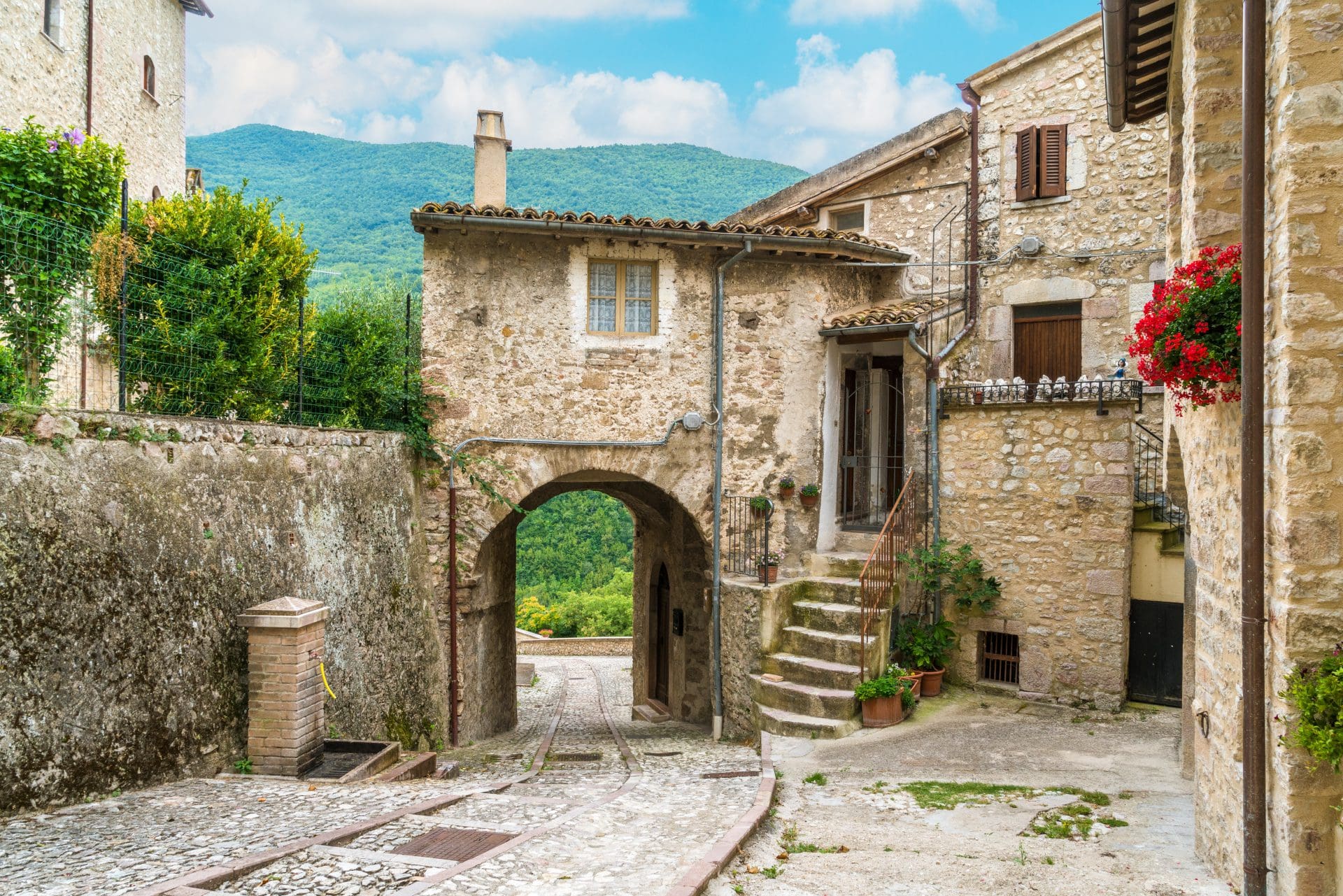
Citerna, Montone, Pietralunga and Monte Santa Maria Tiberina, with their ancient origins, combine the beauty of their panoramic position with the sobriety of their medieval urban layout. Umbertide, San Giustino and Lisciano Nicone, with their castles, hermitages and abbeys testify to a vital social, artistic and religious history.
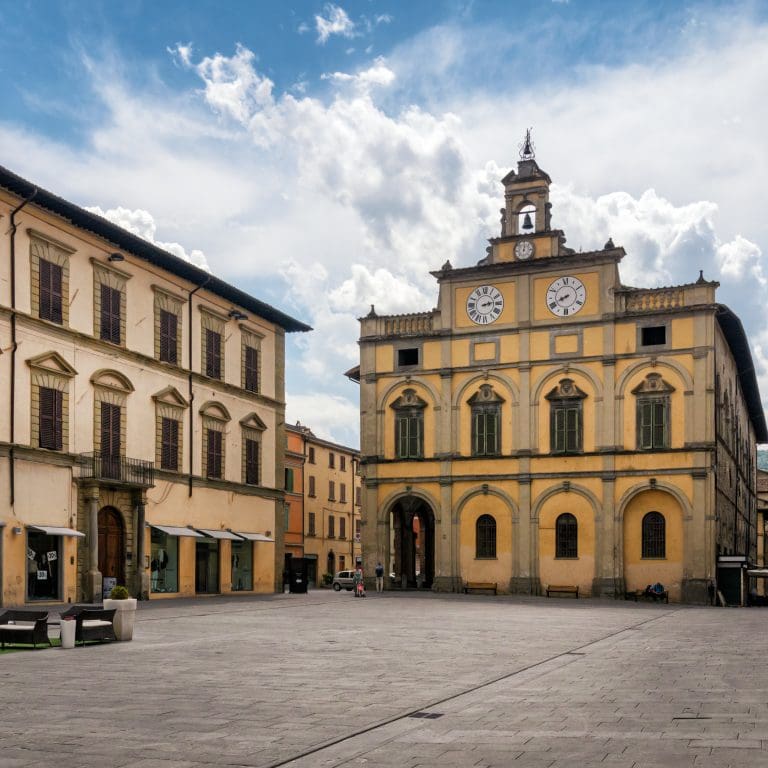
Città di Castello, located almost in the centre of the valley, rich with medieval and Renaissance monuments, is the area’s most important and densely populated city. Protected behind an imposing expanse of sixteenth-century city walls, the city boasts an important artistic and architectural heritage from the Middle Ages and the Renaissance. Be sure to visit: Palazzo Vitelli alla Cannoniera, built between the fifteen and the sixteenth centuries; and the Municipal Art Gallery, housing famous works by Raphael, Luca Signorelli, Giovanni and Andrea della Robbia, Pomarancio and others.
The Cathedral of San Florido (11th century) was restored and partially rebuilt over the centuries. The Cathedral Museum houses the Treasure of Canoscio, liturgical furnishings from the Paleochristian era, and its collection of paintings includes a work by Pinturicchio.
A native son of Città di Castello, Alberto Burri is one of the most important contemporary Italian artists. A collection of 257 of his works are housed in Palazzo Albizzini and in the former Tobacco Drying Warehouse, created between 1948 and 1993.
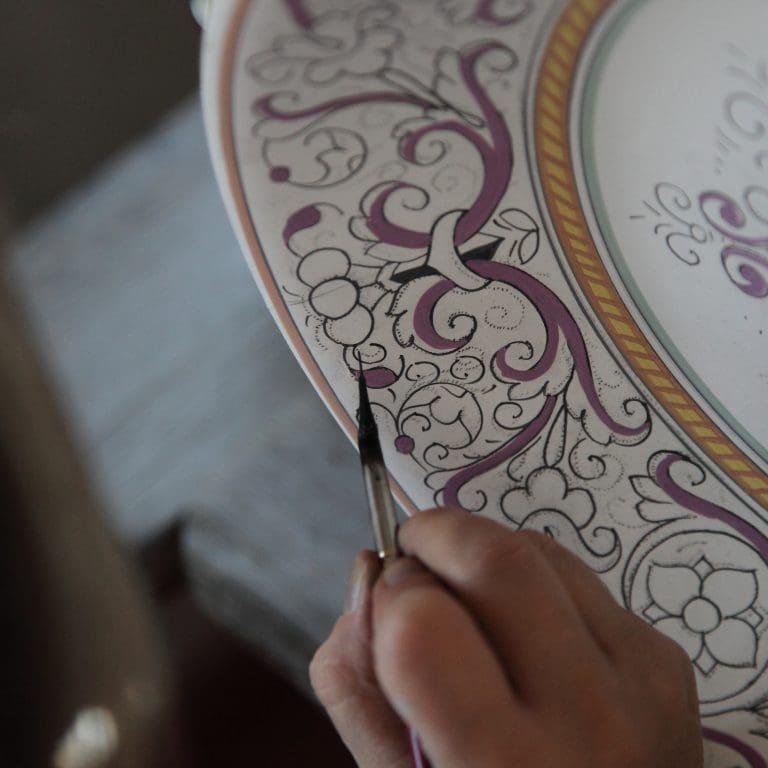
The city’s most important local crafts include period furniture and ceramics, woven fabrics (as seen in the famous Umbrian Handmade Linen Workshop), ironworking, goldsmithing and the typographic arts.
The area’s traditional cuisine is a reflection of its rural culture, with genuine and wholesome flavours, featuring the finest native ingredients including, first and foremost, white truffle.
Villages to be discovered!
photogallery
-
Basilica of Canoscio -
Cathedral of Saints Florido and Amanzio -
Palace Vitelli alla Cannoniera -
Santa Maria della Reggia
(Umbertide) -
Grande Rosso (Alberto Burri) -
Cathedral Museum -
Palazzo Albizzini – Burri Collection -
Villa La Montesca -
Sanctuary of the Madonna delle Grazie -
Montone