

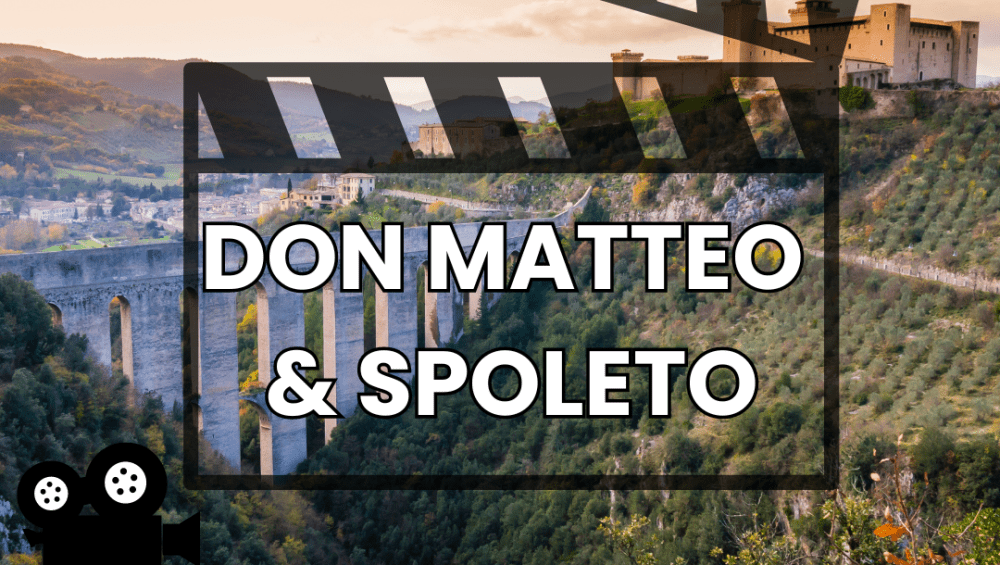
On the Trail of Don Matteo in Spoleto
Spoleto, a hidden gem nestled among the green Umbrian hills, is a place rich in history, culture, and charm. Besides being an ideal destination for art and gastronomy enthusiasts, Spoleto is famous for the Festival dei Due Mondi and as the city where the popular Italian television series “Don Matteo” is filmed. Let’s explore together the enchanted places in Spoleto that provide the backdrop for the adventures of our beloved detective priest!
Cathedral of Santa Maria Assunta and Palazzo Bufalini The majestic Cathedral of Santa Maria Assunta, also known as the Duomo di Spoleto, is the iconic location of the series. This masterpiece of Romanesque architecture houses extraordinary works of art and represents one of the holiest places in the city. In the plot of “Don Matteo,” the cathedral serves as the Rectory, the Carabinieri barracks, and the Parlor. Not far away, you can admire Piazza della Signoria, where many scenes of the fiction were shot. Palazzo Bufalini was used for external shots of the Carabinieri barracks.
Basilica of Sant’Eufemia and the Caio Melisso Theater Located inside the Episcopal Palace, built on the foundations of the ancient residence of the Lombard dukes, is the setting that hosts the Church of “Don Matteo.” Nearby is the Caio Melisso Theater, which, for the purposes of the fiction, becomes the prison parlor.
A Journey into the Heart of Spoleto Exploring the locations where the “Don Matteo” series is filmed is a fascinating experience that allows visitors to fully immerse themselves in the magic of the show. Spoleto, with its rich history, charming architecture, and mysterious aura, offers an unforgettable journey into the heart of Umbria.
If you are a fan of the series, there is no better way to experience the adventures of Don Matteo and his faithful friend Cecchini, played by Nino Frassica, than to personally visit these enchanted places. Spoleto will welcome you with open arms, offering not only the beauty of its monuments but also the opportunity to relive the exciting moments you loved on the screen.
So, get ready for a journey into the world of Don Matteo, exploring the same winding alleys and bustling squares that served as the backdrop for his most thrilling investigations. Spoleto awaits you with its secrets and stories to tell, ready to enchant you with its timeless charm.