UmbriaSì tells about “Il Perugino”

UmbriaSì racconta il Perugino, Il Meglio Maestro d'Italia


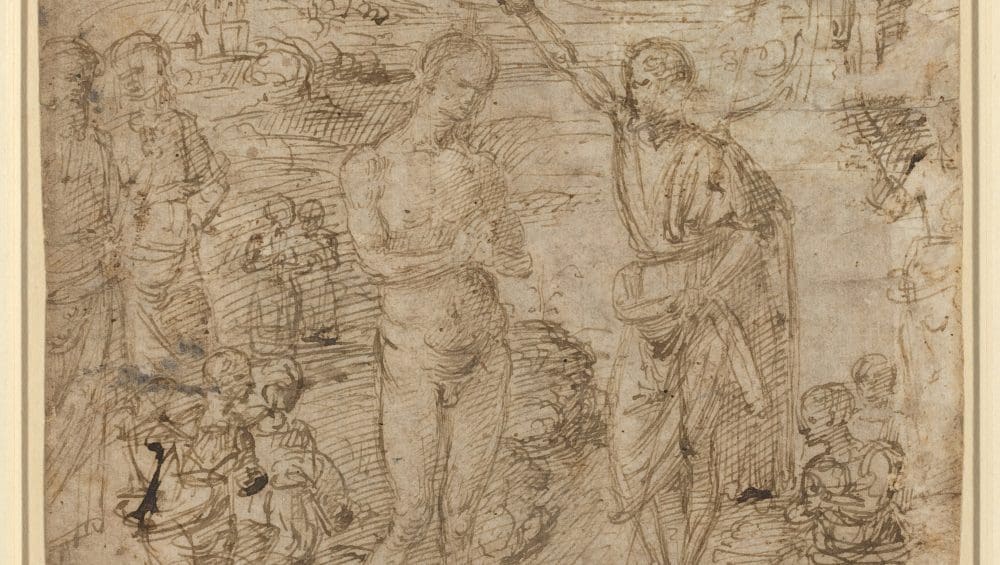
There has been great excitement in recent months in Umbria for the preparations for the great exhibition dedicated to Perugino the Divine Painter.
From 4 March the exhibition for the 500th anniversary of the death of Pietro Vannucci will be held in Perugia at the Galleria Nazionale dell’Umbria until 11 June, with the name “the Best Master of Italy” as defined in 1500 by Agostino Chigi, great art connoisseur and patron of his time.

Let’s retrace Perugino’s life together, his artistic works, to let you experience the art of the Divine Painter that echoes not only throughout Umbria and Italy, but throughout the world.

Pietro di Cristoforo Vannucci
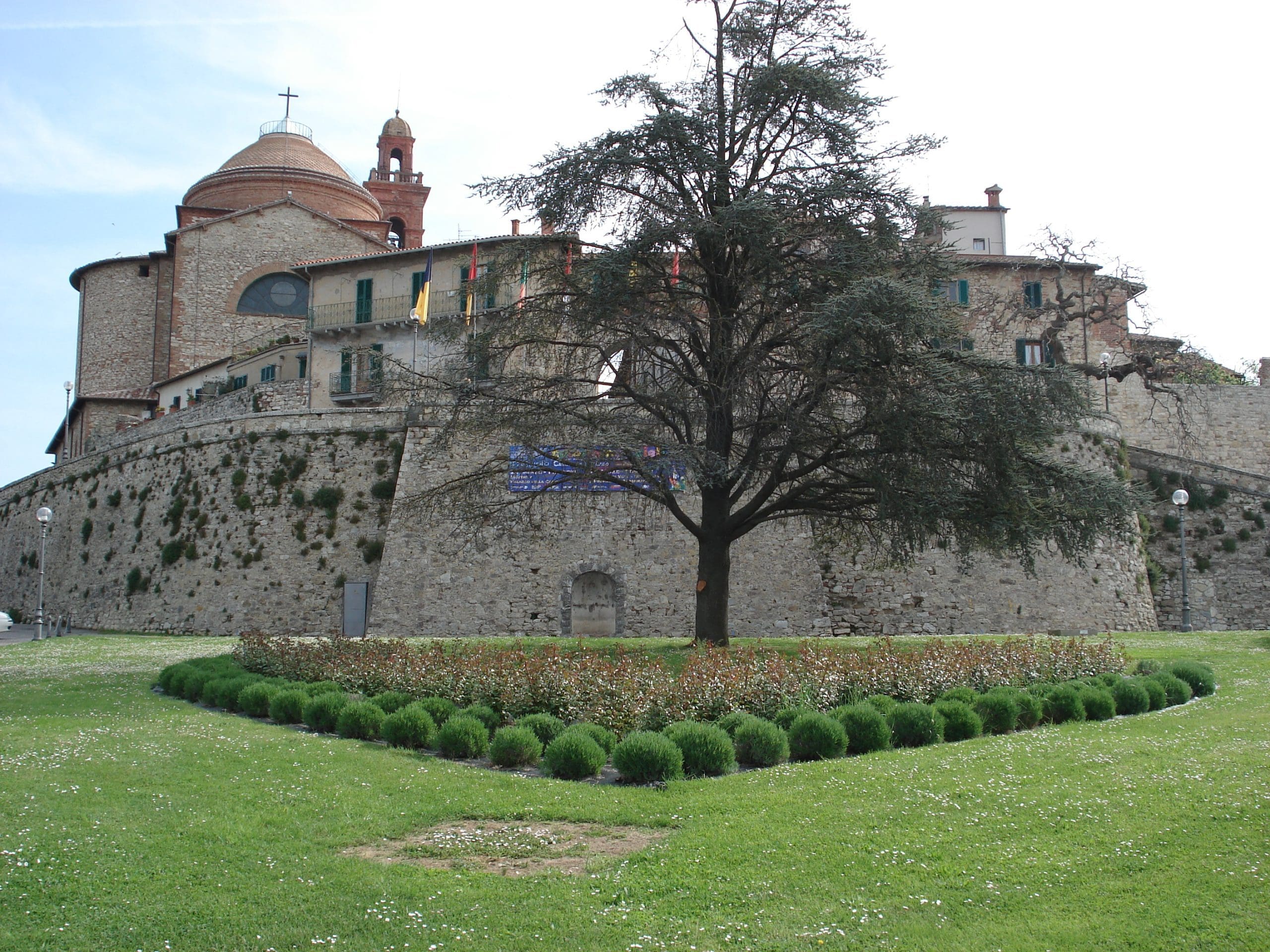
Born in 1448 in Città della Pieve and died in 1523 in Fontignano, from a wealthy and important family in the Umbrian political panorama; in fact Perugino’s father, Cristoforo di Pietro di Giovanni, held the position of Prior of Città della Pieve in 1459.
The name Vannucci, as the family was known, derives from the name of the great-grandfather, Giovanni, known by the diminutive of Vannuccio.

Many names that distinguished his art, production and fame beyond the definition of “Best Master of Italy”, of Divine Painter, as we read in the verses of the Painter Giovanni Santi, Raphael’s father, of whom he was master, and “Il Perugino” outside the regional borders. Perugia, in fact, was much better known and thriving from the point of view of artistic productions, compared to other Umbrian cities.

Pietro Vannucci, in his early twenties, began his artistic training in Città della Pieve, in the workshops of Sienese painters. In 1460 he was already recognized for his talent so much that he was an apprentice accompanist in Arezzo to Piero della Francesca. Ten years later, he frequented the most famous workshop in Florence, that of Andrea Verrocchio where the art of goldsmithing, sculpture and painting was practiced. The Florentine environment gave Pietro Vannucci the opportunity to know and come into contact with other artists such as Botticcelli, Filippo Lippi and Leonardo.
In 1472 Perugino finished his apprenticeship and began his career as a painter after enrolling in the Compagnia di San Luca as a “painter“.

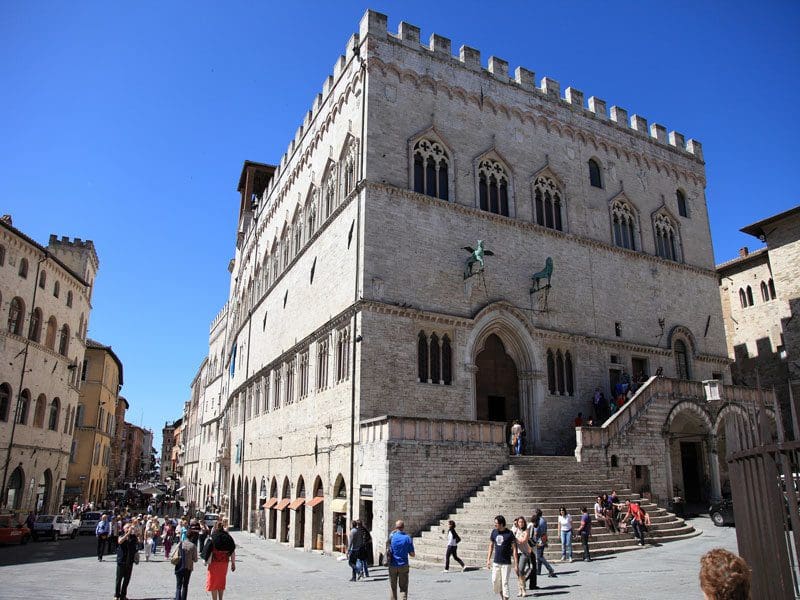
An important work of his lost, but testified by the payment made in his favour, was the commission of the decoration of the Great Hall of the Palazzo dei Priori by the Municipality of Perugia in 1475.

Perugino’s fame continues to grow and from 1478 he will be engaged in Rome, by will of Pope Sisti IV, for the decoration of St. Peter’s Basilica in the Vatican first, and then the Sistine Chapel, with the famous scene of the “Delivery of the Keys” (in which a self-portrait of the Painter is visible). On this occasion he will come into contact with other painters such as Cosimo Rosselli, Bernardino di Betto Betti known as Pinturicchio and Luca Signorelli.
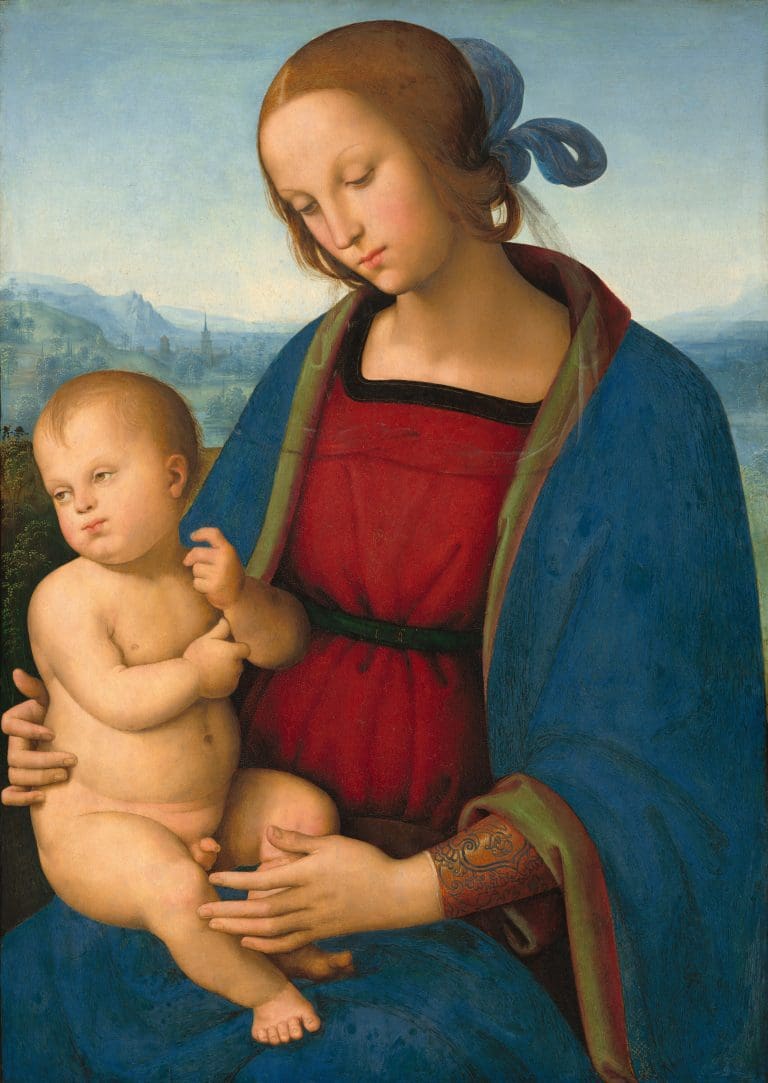
In 1493 he marries in Fiesole the woman who will be his great inspiring Muse for him, above all for the faces of the Madonnas he painted (such as the Madonna with Child and Madonna with Child between Saints John the Baptist and Sebastian), Chiara Fancelli, daughter of sculptor and architect Luca Fancelli, a pupil of Brunelleschi. From their marriage 5 children were born, and she decided to settle in Florence, also in consideration of the fact that the Divine Painter had his workshop in Florence, as well as in Perugia.
In 1498, the Divine Painter was called to fresco the Hall of the Collegio del Cambio (seat of the money changer) with the Cycle of the Virtues.
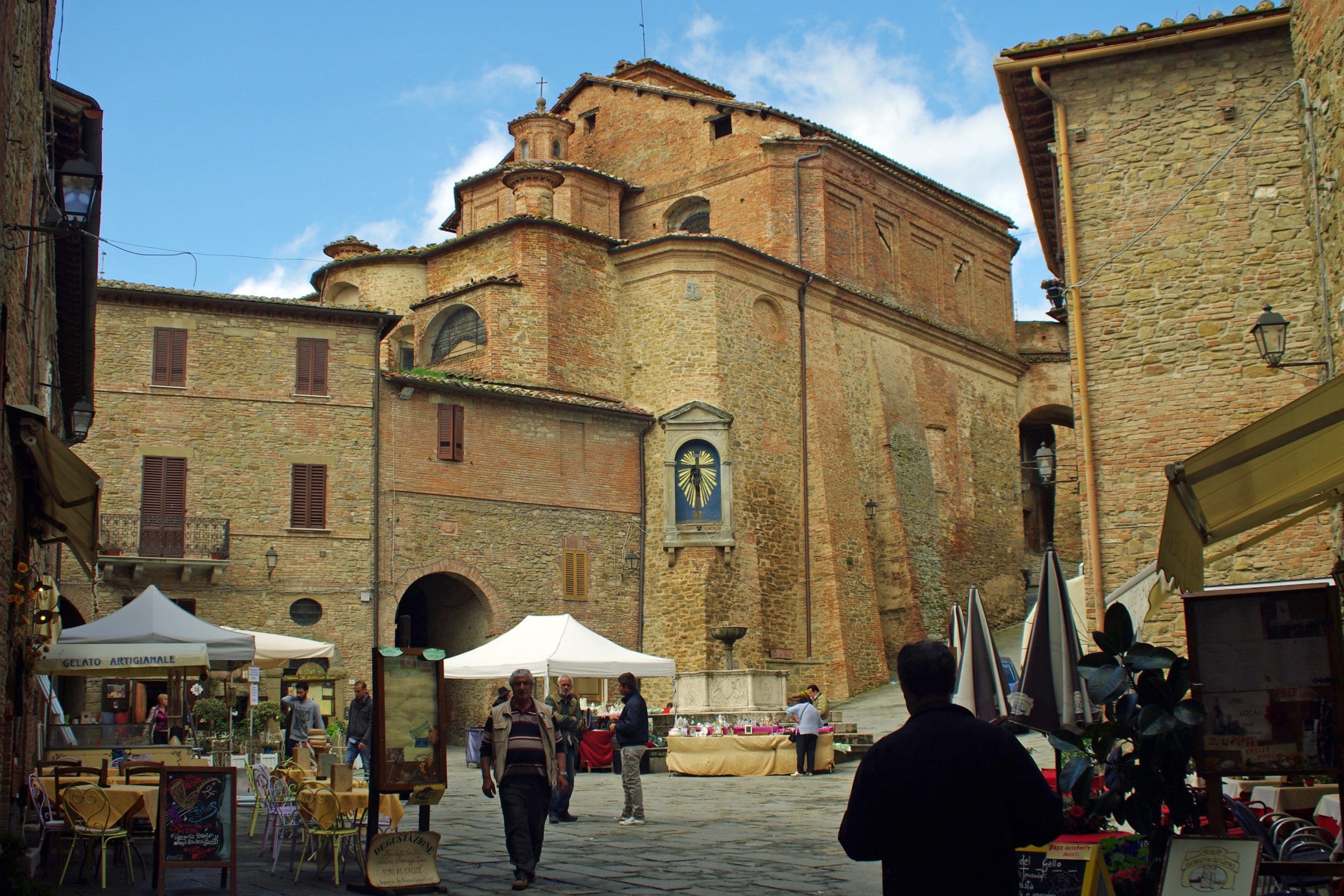
Since 1500, Perugino has dedicated himself to creating works in his native Umbria, evidenced by the presence of the typical features of the region such as rolling hills and landscapes full of greenery in Città della Pieve, his native land, but also Spello Foligno, Panicale, Trevi and Perugia.
The Divine Painter died in 1523 of the bubonic plague in Fontignano, and was buried under a tree. In 1925 his remains were found next to small pots of paint. In 1929 it was placed in the urn with the epigraph PETRVS-PERVSINVS-PICTOR and transferred to the church of Santa Maria dell’Annunziata, also in Fontignano, where Perugino was probably painting “The Madonna with Child” commissioned in 1521 by the confraternity of the Announced.
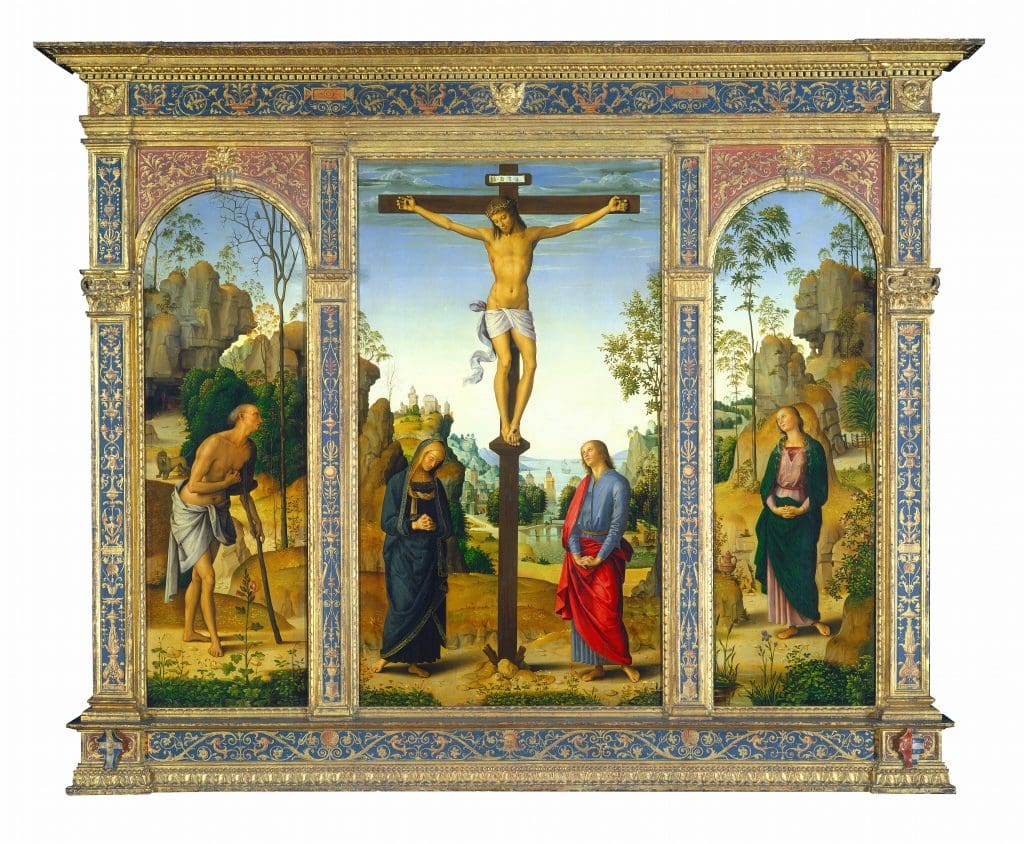

Credit photo:
Nation Gallery of Art
 

Waters Of Umbria

Waters Of Umbria

Starting from Euro 195,00 per person

FIRST DAY

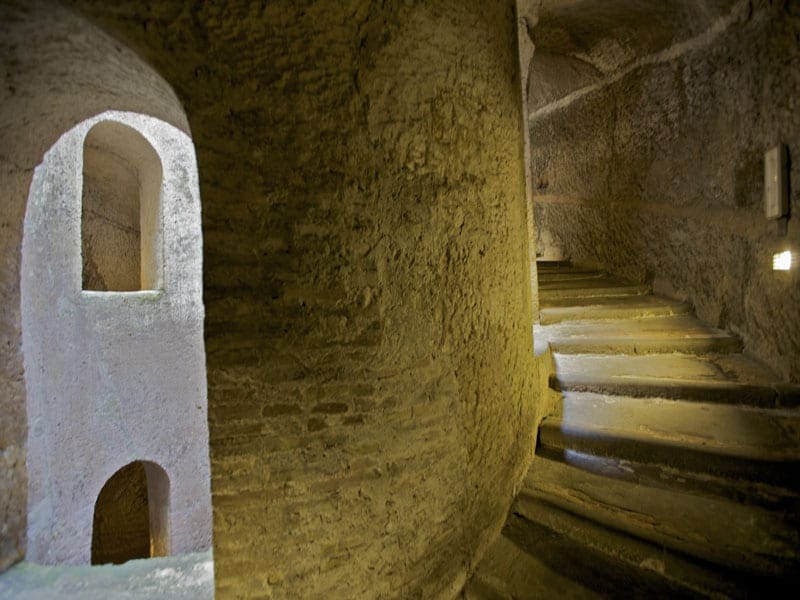
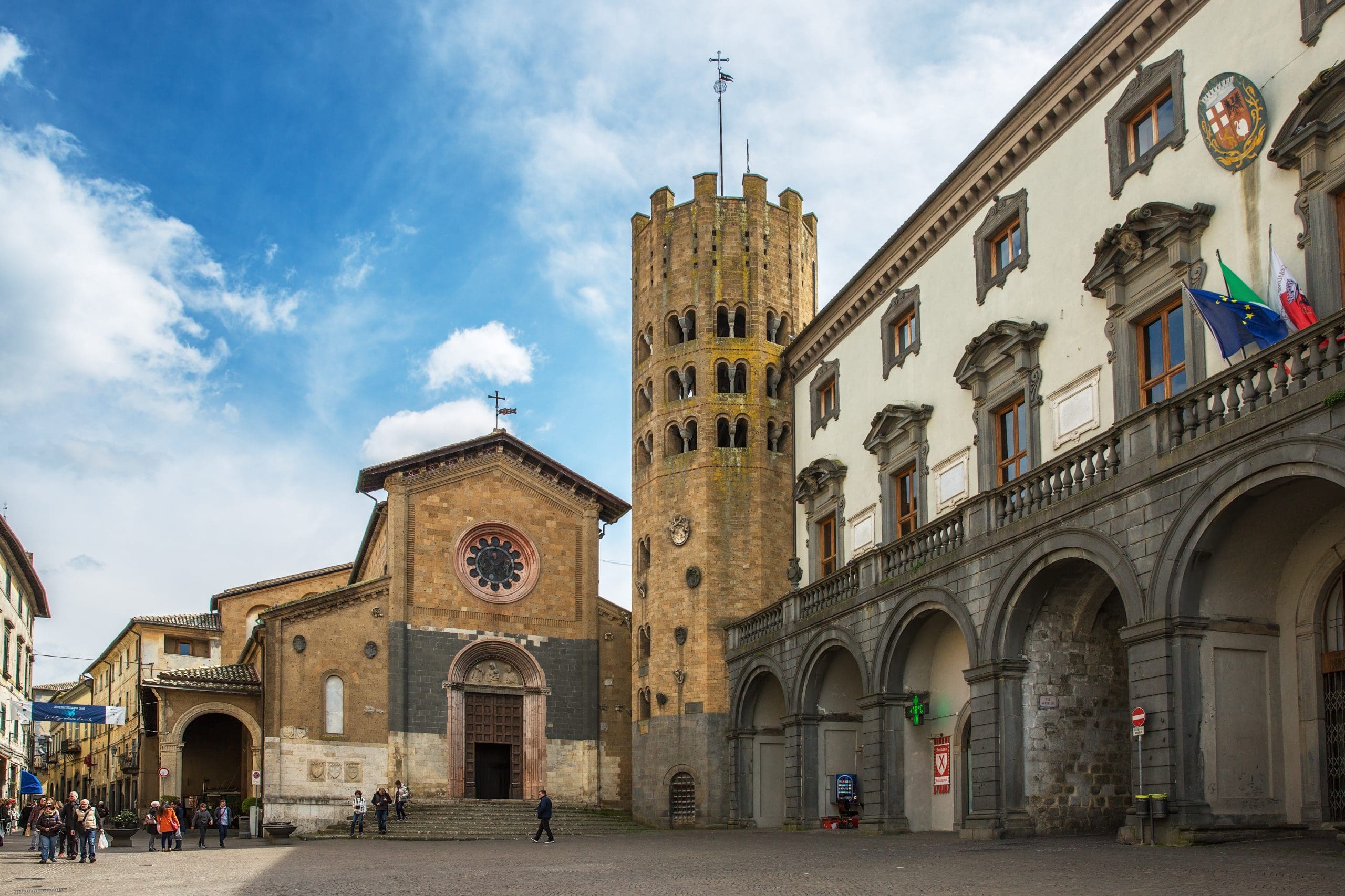
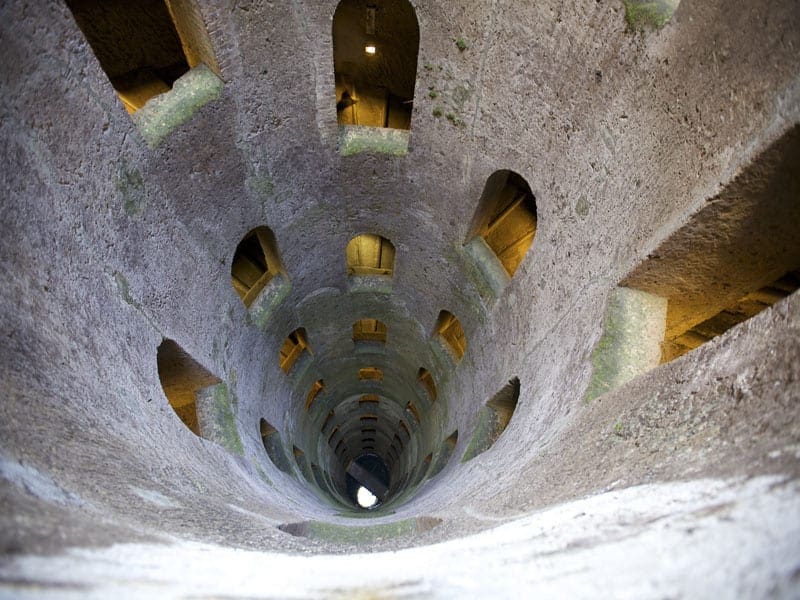
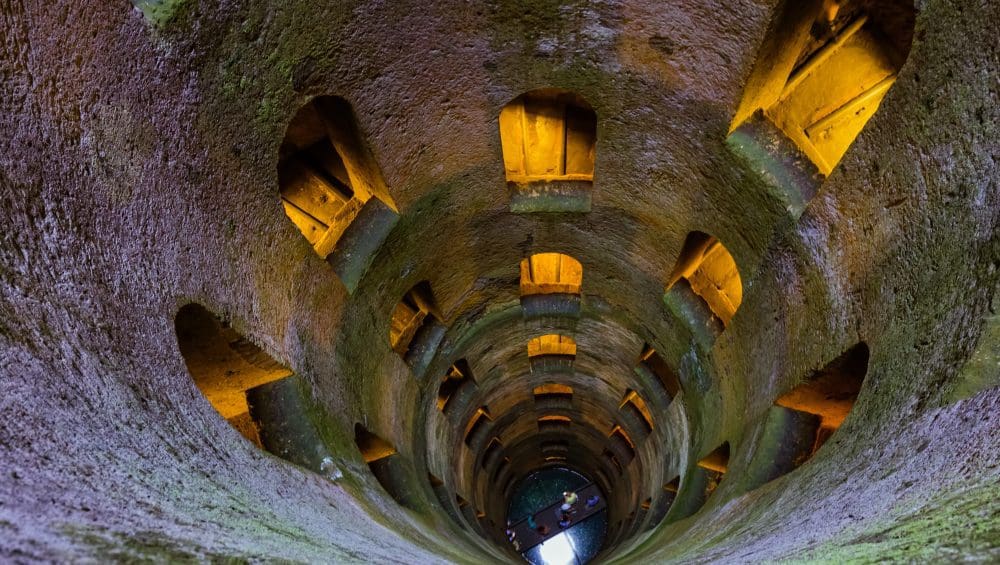
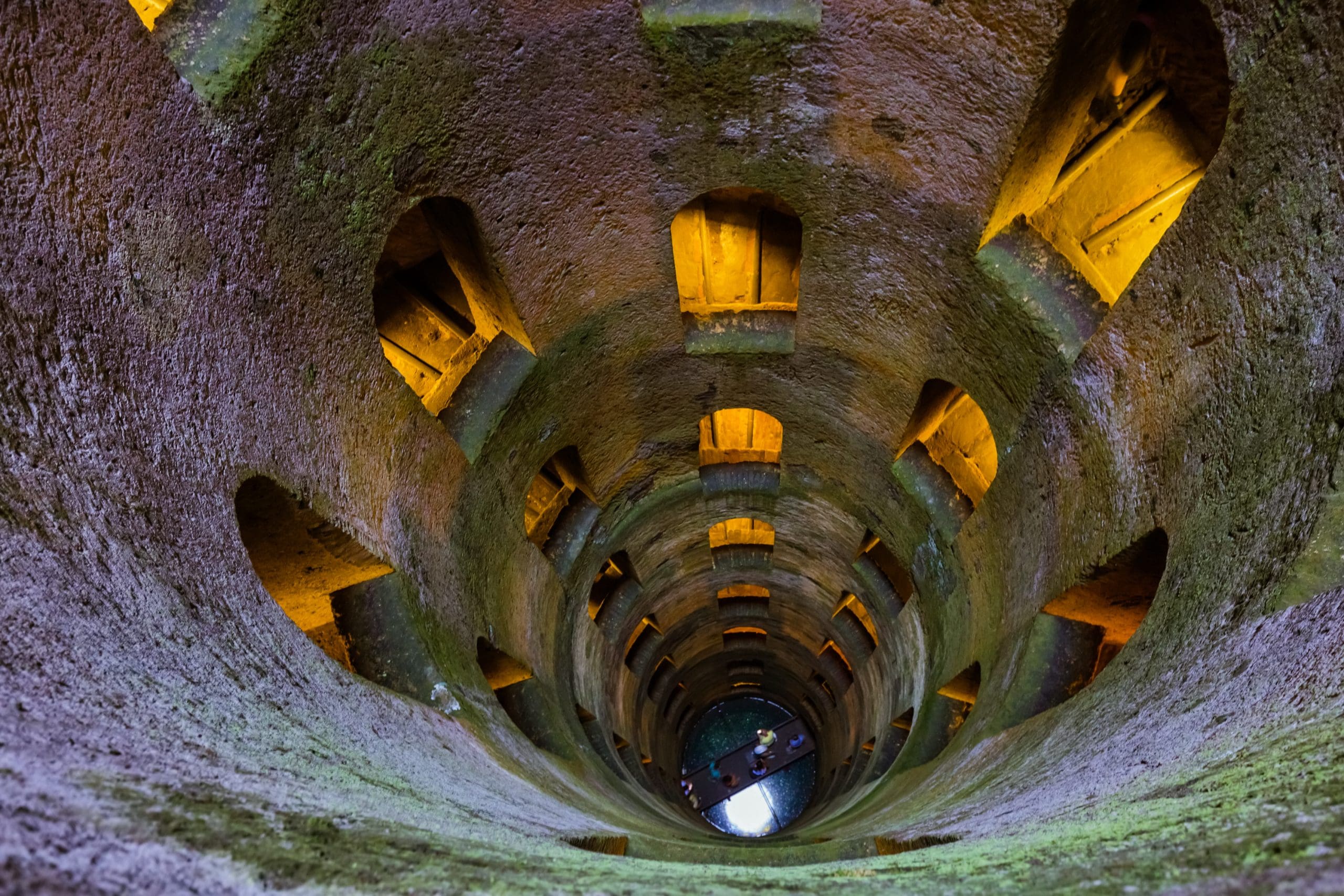
The first stop on the itinerary for the family will be Orvieto. Here, thanks to the Carta Unica, you will have access to the main monuments of the city. In particular, we suggest the Pozzo di San Patrizio, a real masterpiece of Renaissance engineering. It was built in the 16th century to guarantee citizens water at any time of the year, especially in the event of a disaster or a prolonged siege. You can reach the bottom of the Well through a long spiral staircase of 248 steps, while to go up again you will have to use a second ramp.

Accommodation and overnight

SECOND DAY

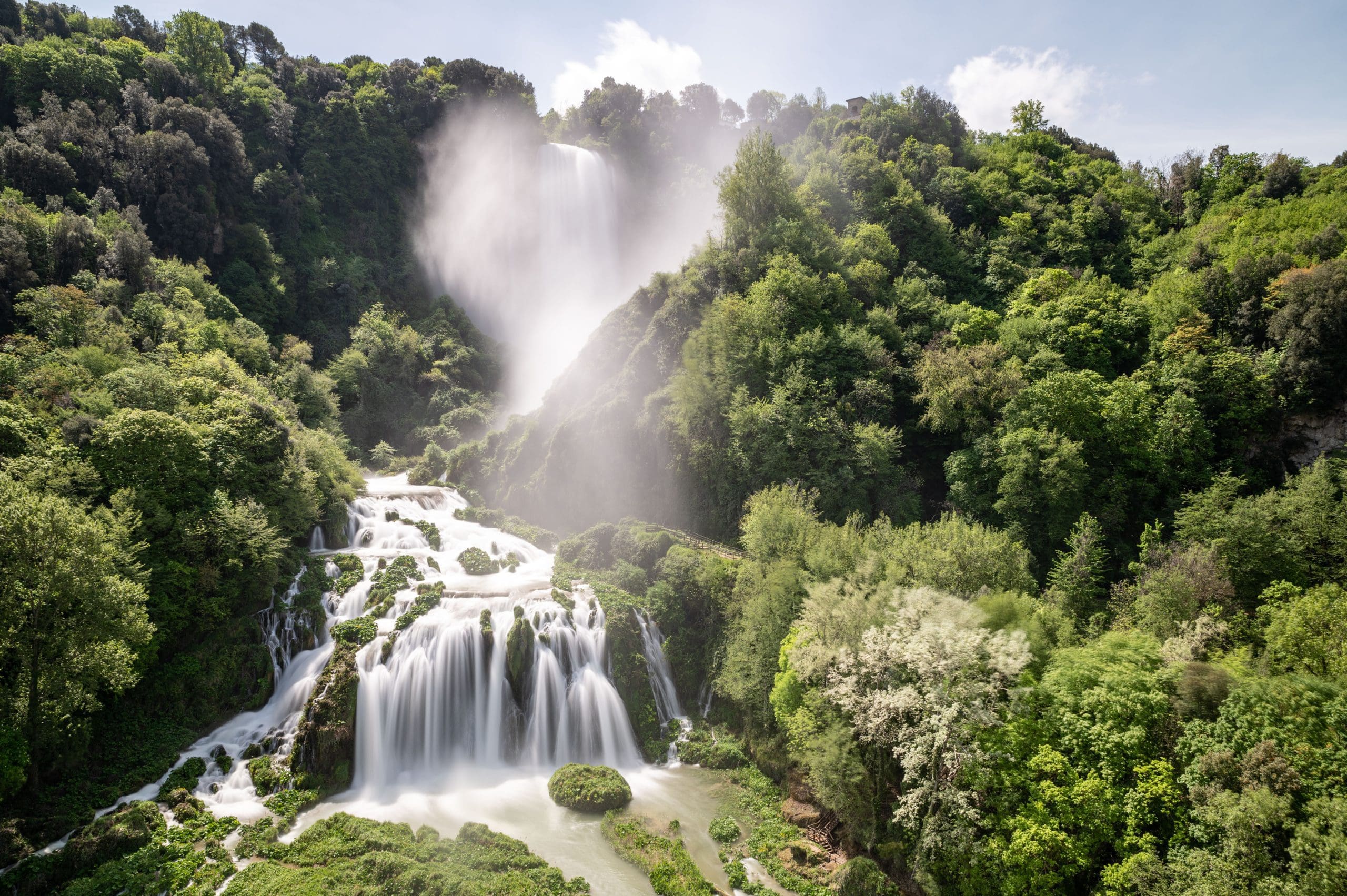
After breakfast we suggest moving towards the Marmore Falls, with entrance to the Park with a free walk (payment on site – note the opening hours of the park and the water flow based on the month chosen for your stay)

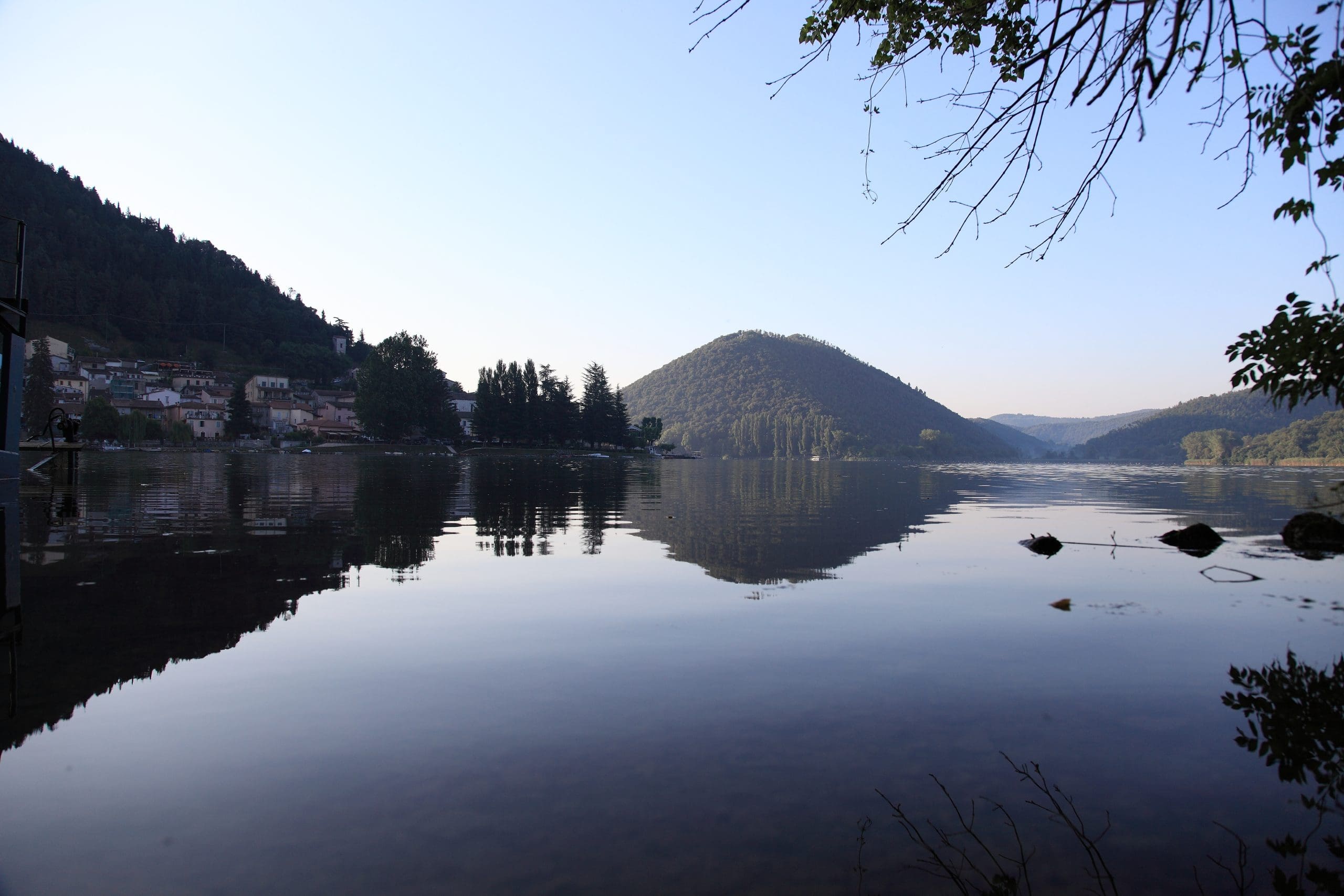
In the afternoon, the itinerary will take the family to Lake Piediluco, which is the largest natural lake basin in Umbria after Trasimeno Lake.

Overnight

THIRD DAY

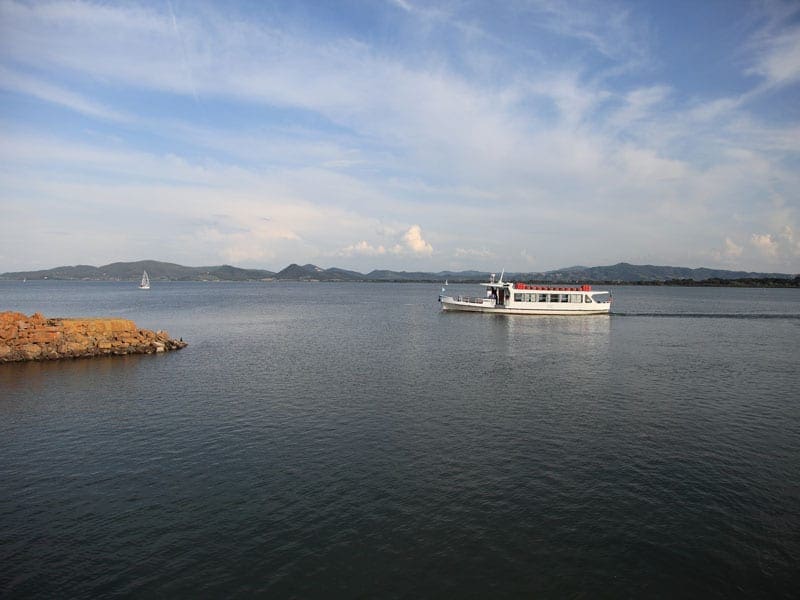
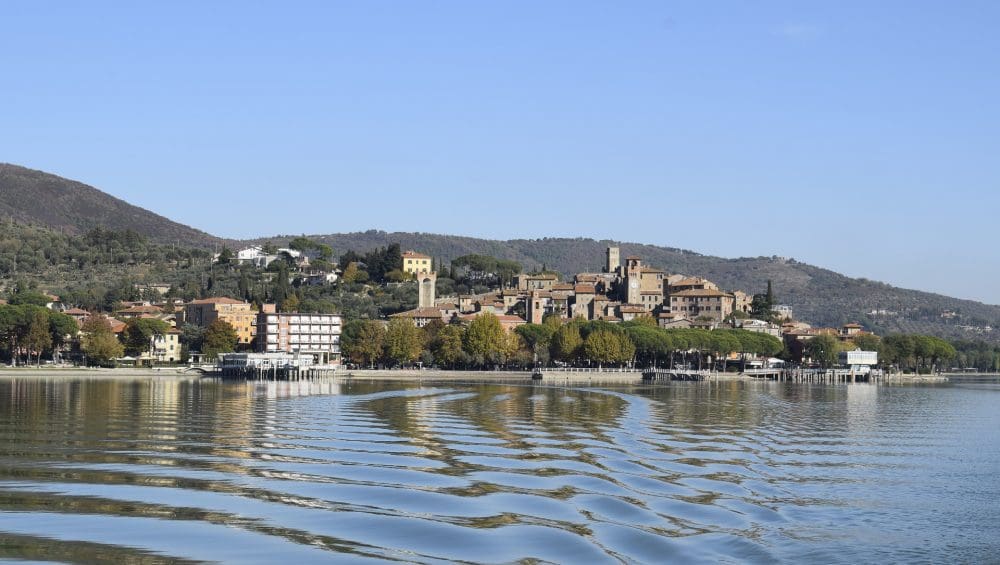
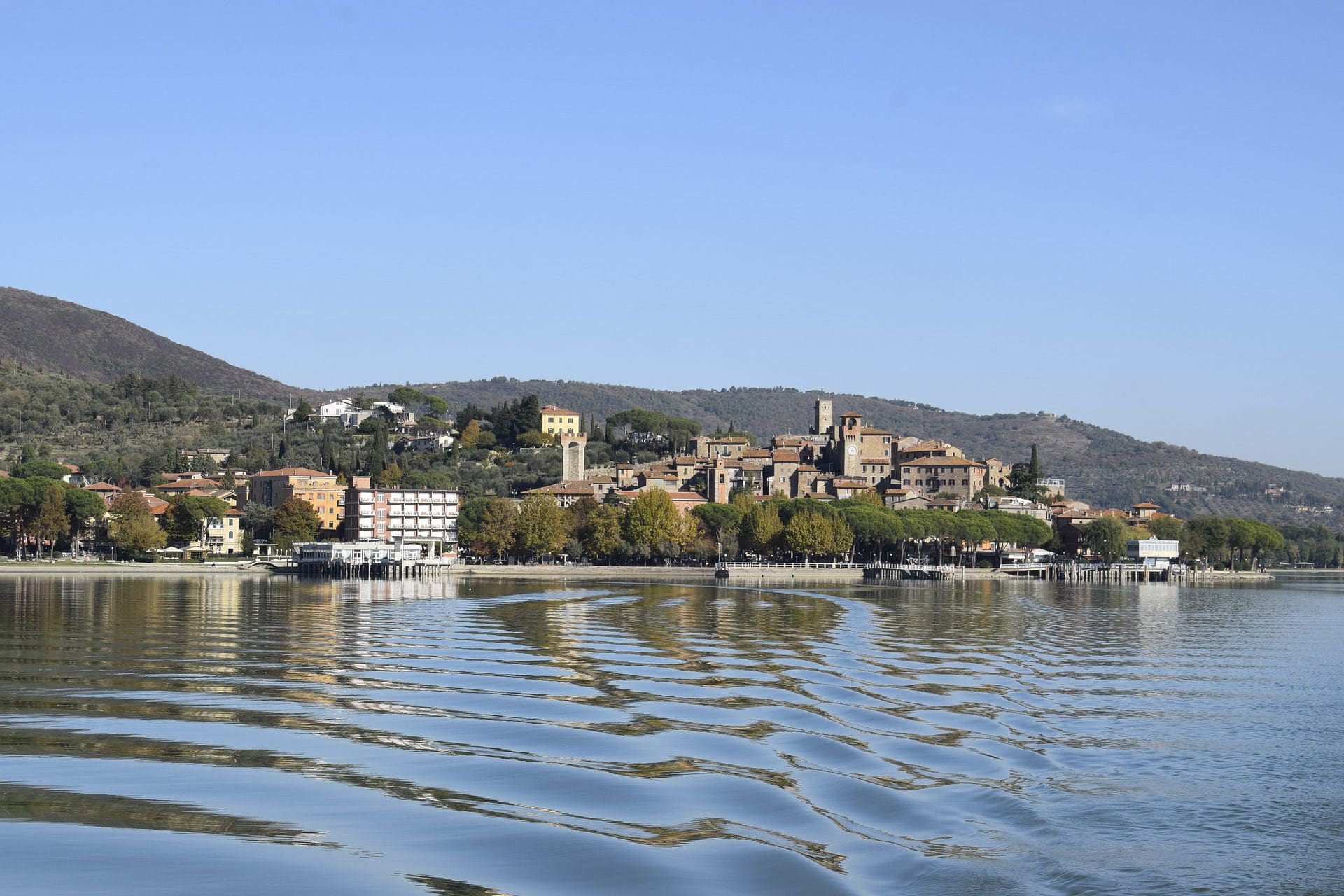
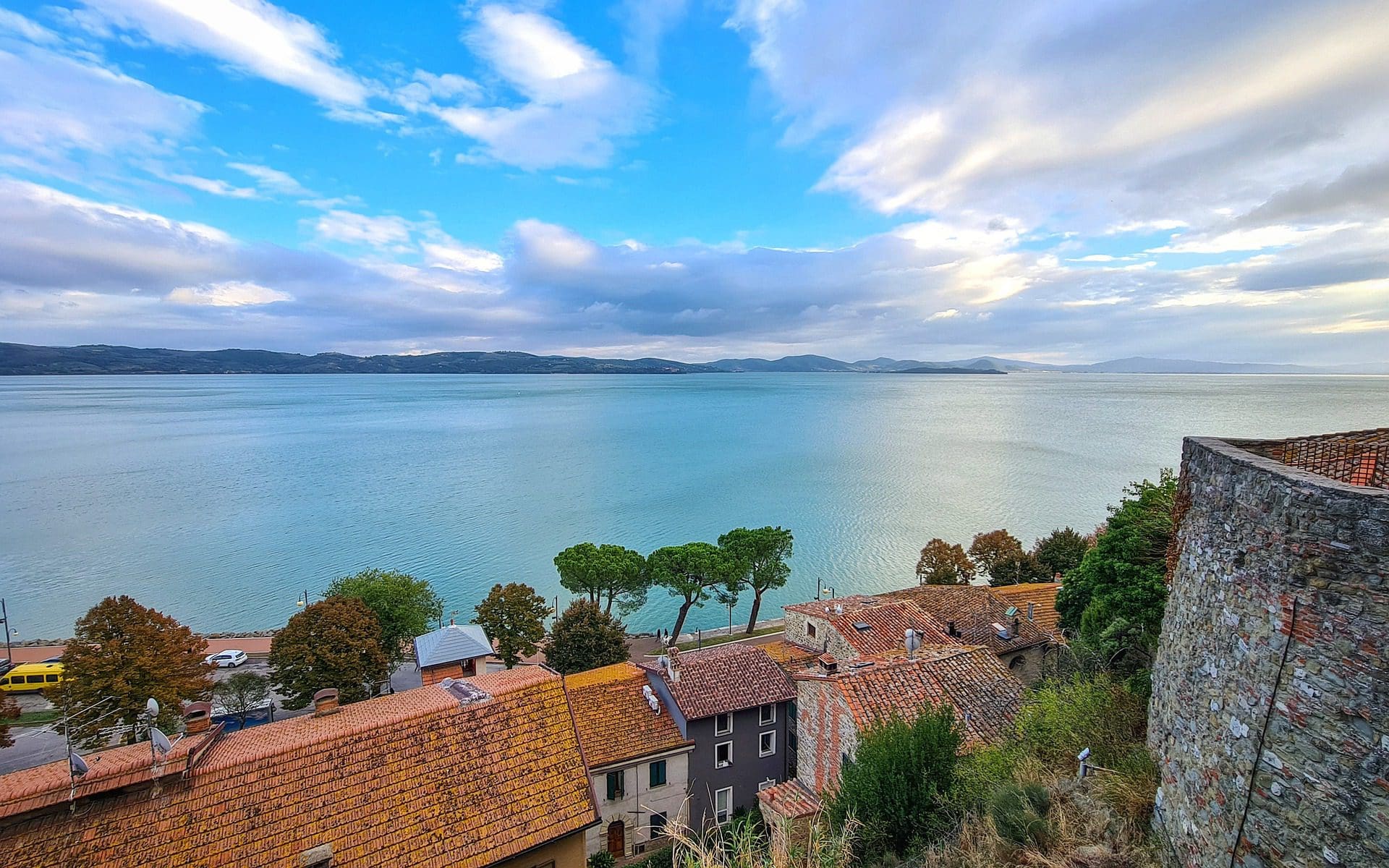
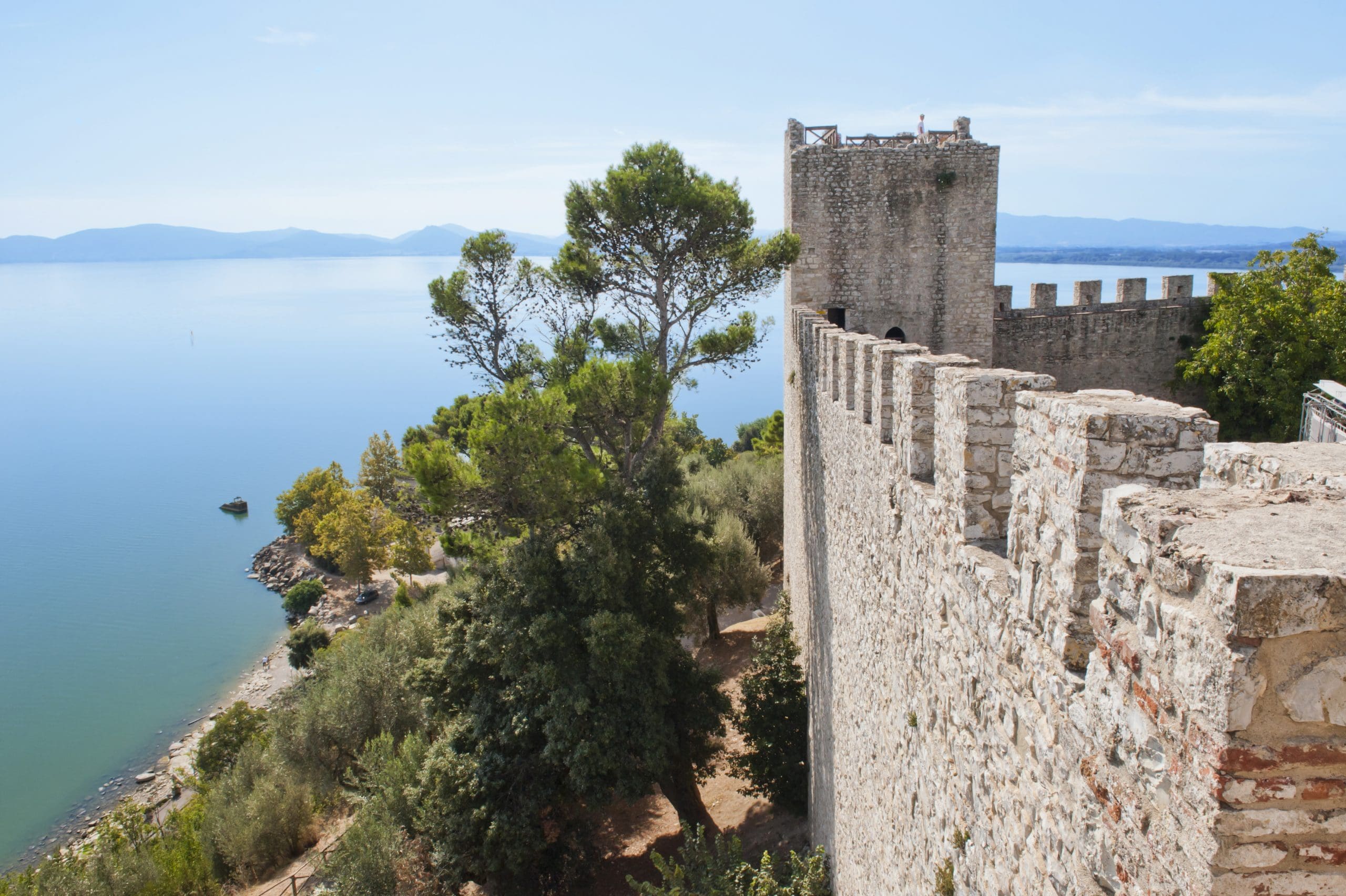
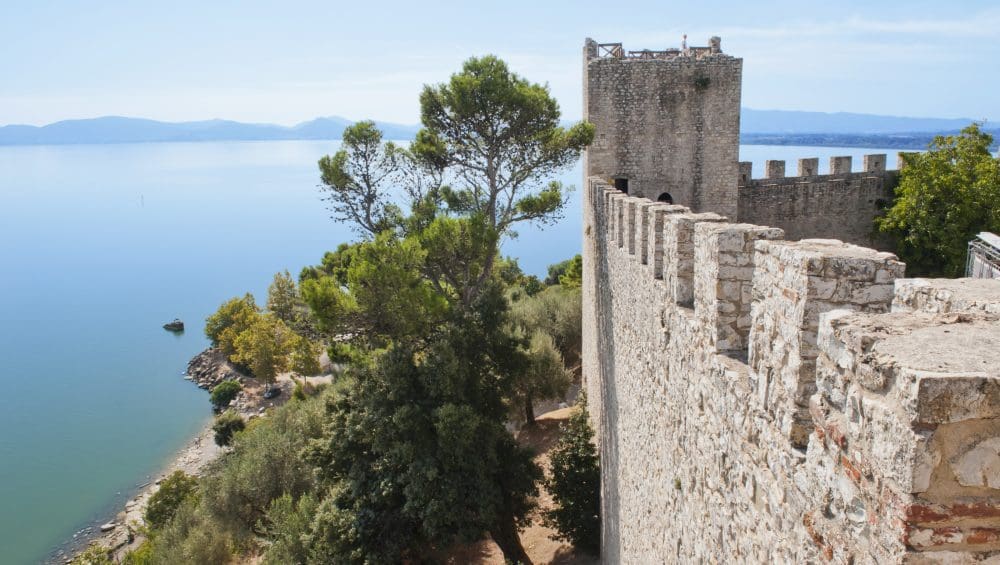
After breakfast, before returning to your destination, you will move towards Trasimeno Lake, the largest in central Italy. From Passignano sul Trasimeno the family will leave for a boat trip to Isola Maggiore, the only one still inhabited of the three islands that plunge into the waters of the Trasimeno.

Our best offer is starting from €195,00 per person

The price per adult includes:

  • 2 nights accommodation with breakfast
  • Orvieto CARTA UNICA for the whole family
  • Boat trip from Passignano sul Trasimeno to Isola Maggiore
  • Cultural entertainment on Isola Maggiore
  • Europ Assistance travel insurance

    The fee does not include:

    • Extras, tips and offers
    • Meals
    • Means of transport
    • City tax where introduced by the Municipality of reference
    • Anything not expressly indicated in “the rate includes”
    Ask for information


      I have read and authorise the processing of my data in accordance with thePrivacy Policy

      I authorise the sending of commercial communications (optional)

      In Partnership

      Gallery

      Carnival sweets in Umbria

      The ancient Latin saying reads
      “semel in anno licet insanire – once a year it is permissible to go crazy”

      Carnival Origin
      The common thread that binds Carnival, the mask or masquerade party par excellence, all over the world seems to be precisely the concept that is furthest from what the Romans called mos maiorum, good morals, morality.

      But before we get to the Romans, let’s take a few steps back.
      The origin of the Carnival dates back to 4000 years ago with the Egyptians and the rites in honor of Isis, the goddess of fertility.

      With the Romans, the Carnival Festival coincided with the Lupercali, in honor of the God Luperco, symbol of Roman fertility. The period, for both Egyptians and Romans, is celebrated at the end of February.

      Sacred and Profane
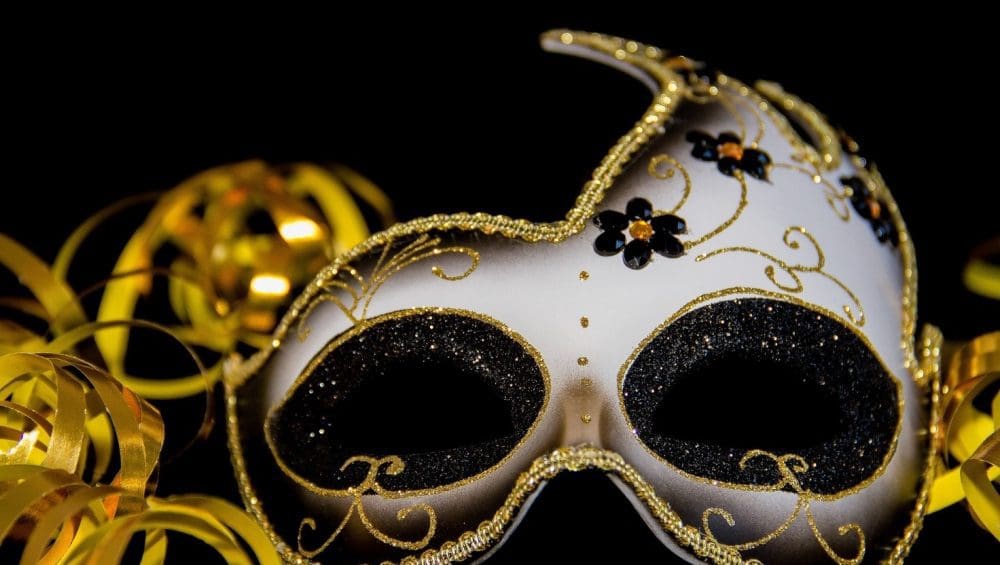
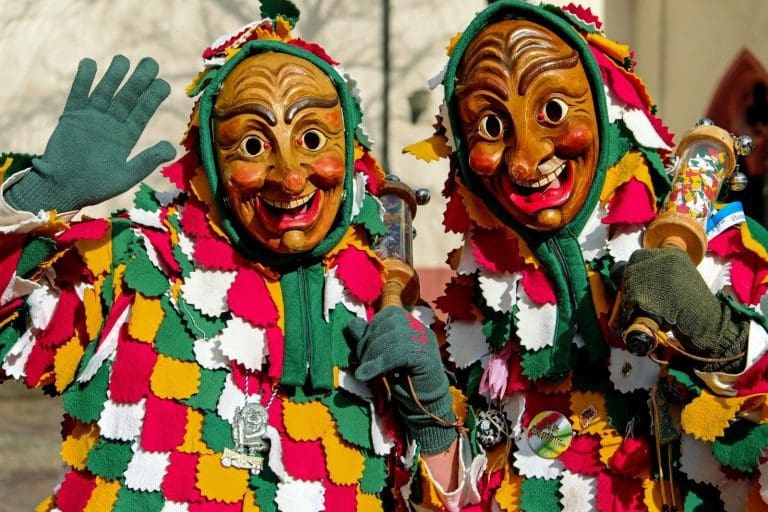
      The Carnival, between banquets, parties and masks, thus becomes a sort of social “level”: a disguise that hides the status of belonging and allows everyone to set aside moral rigidity for a day.
      With Christianity, Carnival from the Latin “carnem levare”, Shrove Tuesday becomes the last day to eat meat before abstaining from consuming it during the period of Lent but also the last opportunity to fill your belly with sweets rich in sugars!

      Tipical sweety food in Umbria
      Whether it’s Egyptian, Roman or Christian, the “reasons” of Carnival are disguise (masquerade) and the consumption of food, especially sweets!

      Let’s see what are the typical ones in Umbria:

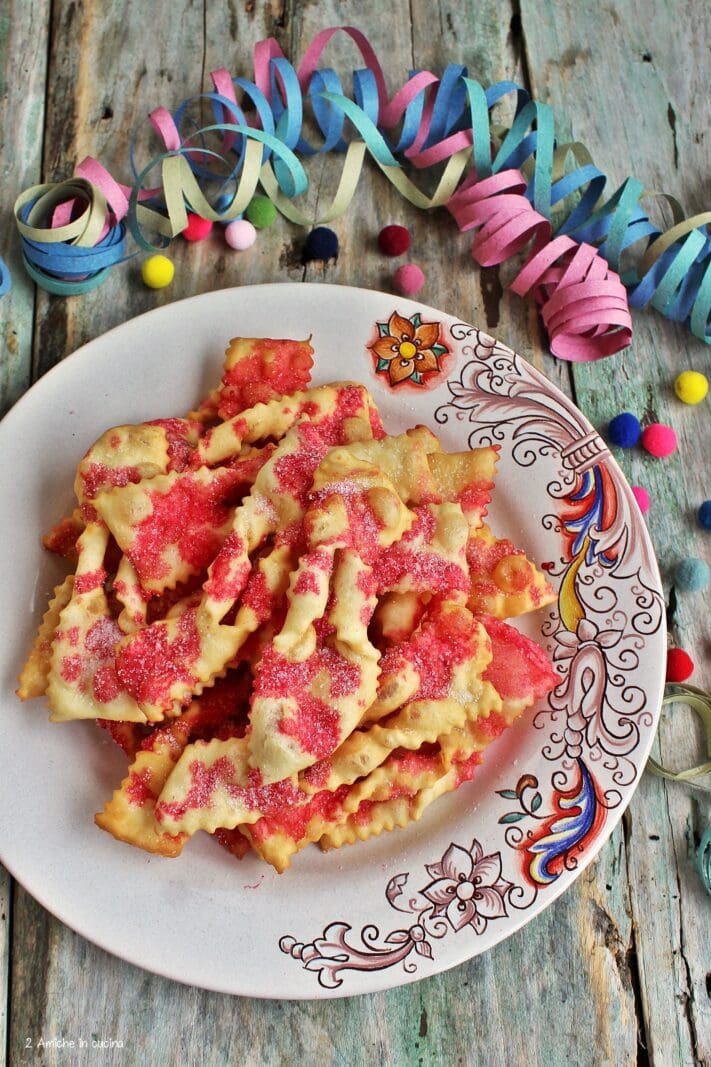
      • Frappe
        Strips of sweet puff pastry in the shape of a bow. Covered with alchermes sugar or honey, they can be either fried (as per the original recipe) or baked in the “lighter” variant. In any case, the result is a crunchy, sweet and tasty pastry.
      • Castagnòle
        The name derives from the memory of the small chestnuts with their rounded shape. The dough is composed of flour, eggs, sugar, yeast and an aromatic liqueur. Also these sweets, as per tradition, are fried paying particular attention to making them golden on the outside and cooked well inside, helping them to remain round during cooking by moving the pan in a rotating direction. Then covered with sugar, honey or alchermes.
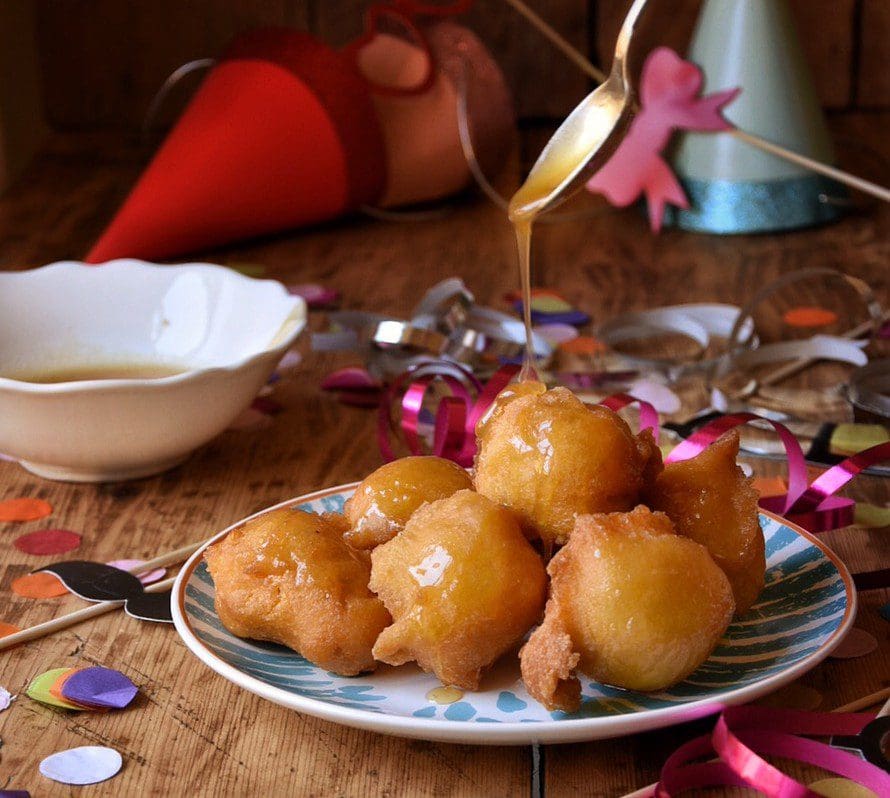
      • Strufoli
        Traditional from Perugino, they resemble castagnole with the difference of having a softer texture and are, on the other hand, larger in size. They are then covered with sweet dripping honey.
      • Cicerchiata umbra
        From the name of the Umbrian Cicerchia, a rounded legume, the cicerchiata is a crown of sweet balls covered in honey.
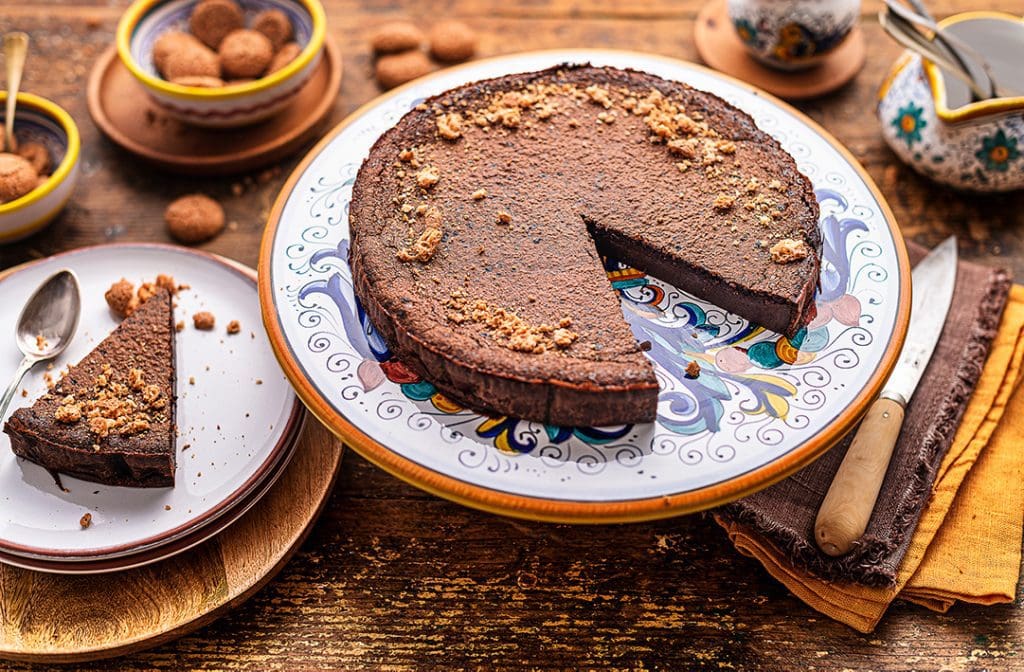
      • Crescionda spoletina
        With this dessert we move to Spoleto with its Crescionda.
        Originally prepared with chicken broth, or lard, in fact also known as “grescia unta” for being particularly fat, sugar, cheese, chocolate and breadcrumbs were then added. Or the version prepared with apples and dried fruit. Today his recipe marries modernity using chocolate, milk and amaretti biscuits. It is also recognized as a Traditional Umbrian Agri-Food Product.

      Credit photo
      UmbriaTourism
      Forchettiere.it
      Antonio Gravante
      2Amiche in Cucina

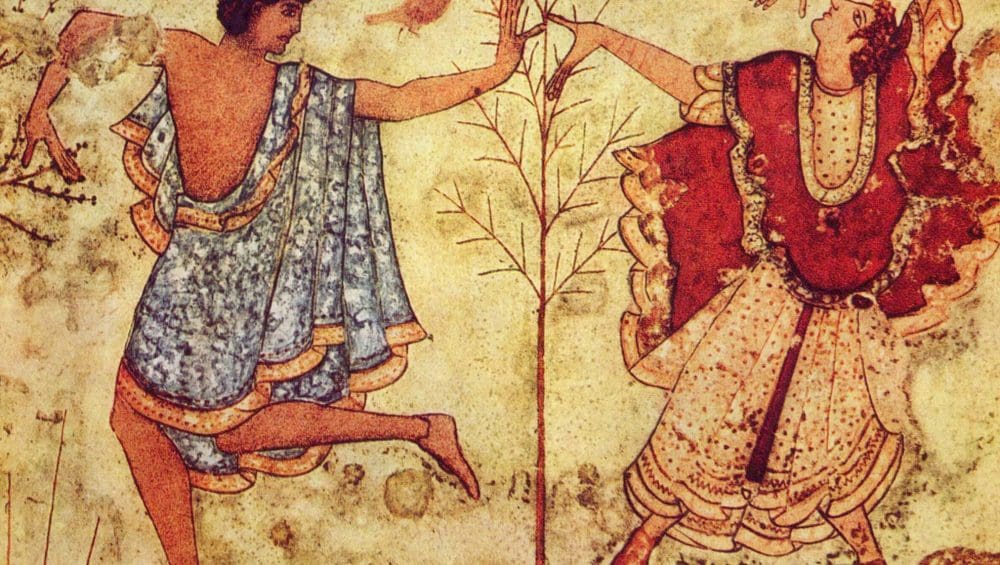
      The Etruscans Between Orvieto And Perugia

      The Etruscans Between Orvieto And Perugia

      Starting from Euro 235,00 per person

      FIRST DAY

      Arriving in the early afternoon, the family will be able to go to the discovery of Orvieto thanks to the “Carta Unica” which will allow access to the main monuments of the city. In particular, we suggest the Well of San Patrizio, a true masterpiece of Renaissance engineering.

      Accommodation and overnight stay

      SECOND DAY

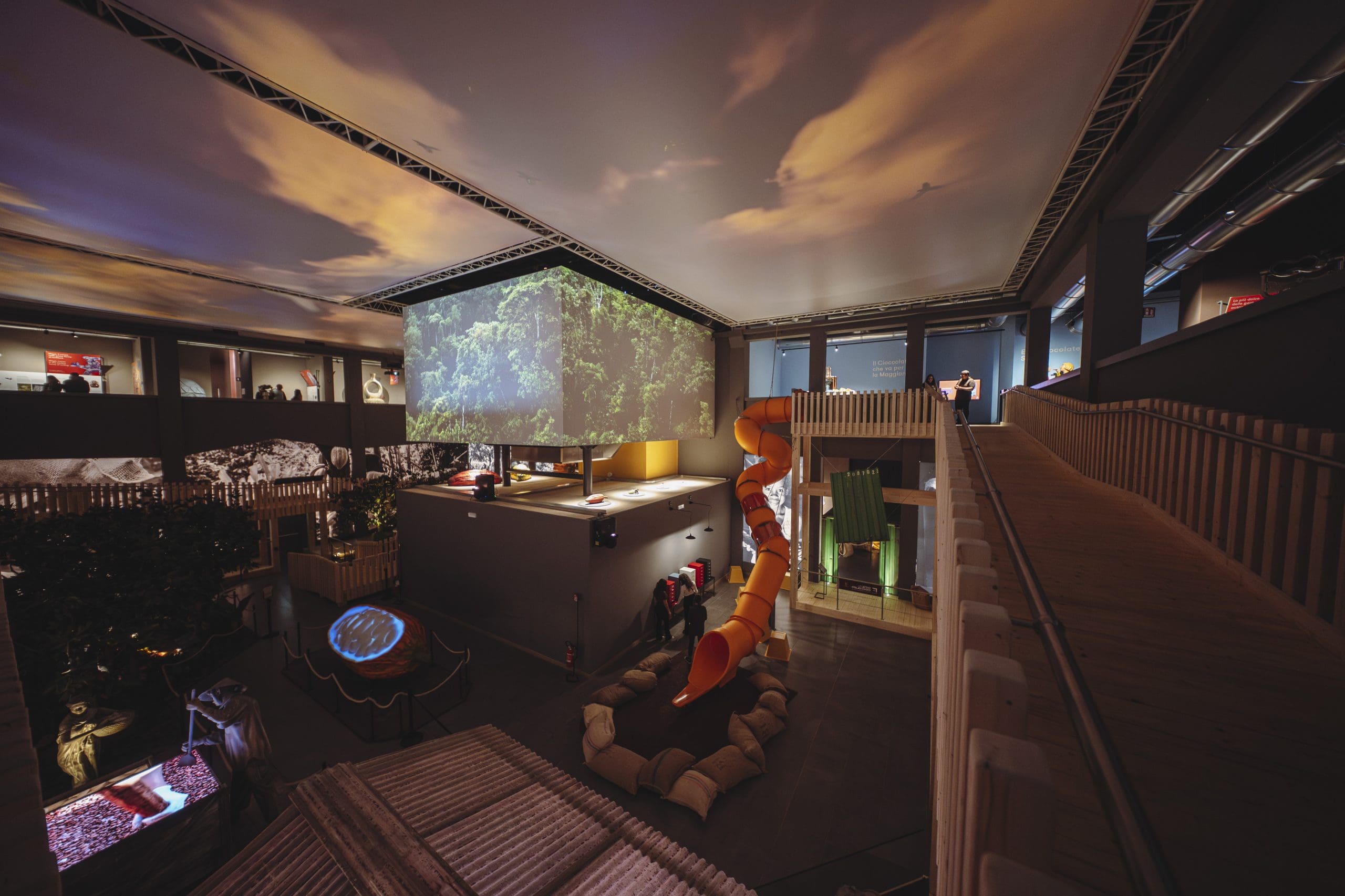
      After breakfast, we will go to the discovery of another of the important Etruscan cities, Perugia. Here the family in the morning will have the opportunity to taste one of the products that have made the city of Perugia famous, chocolate. Entrance at Città del Cioccolato.

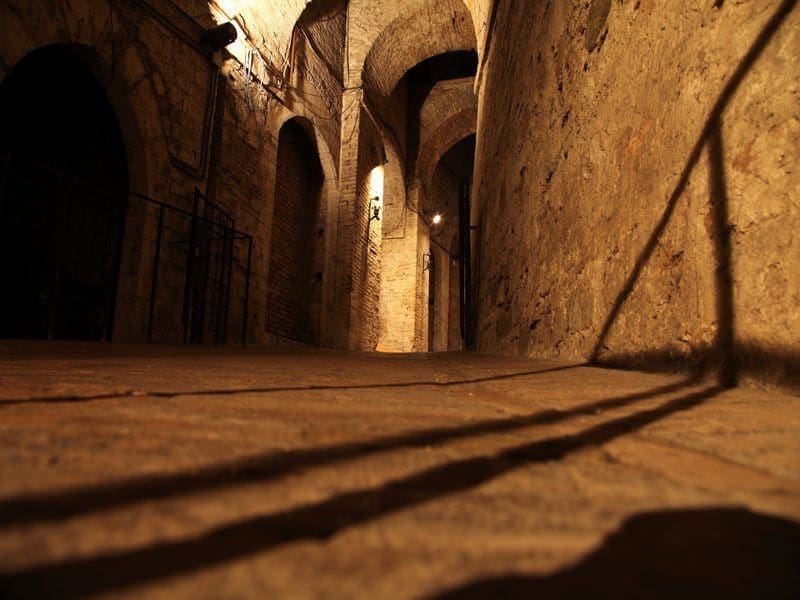
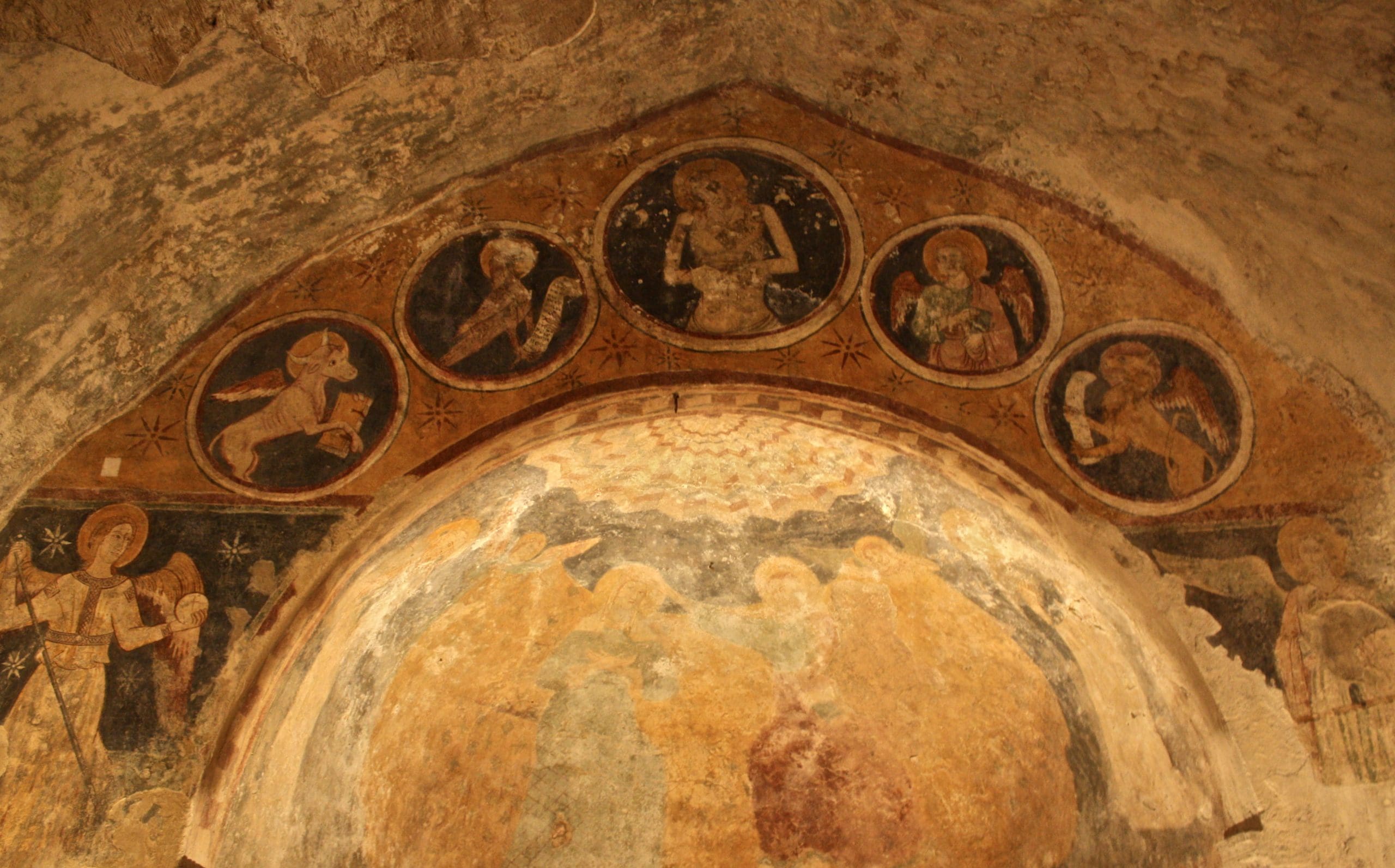
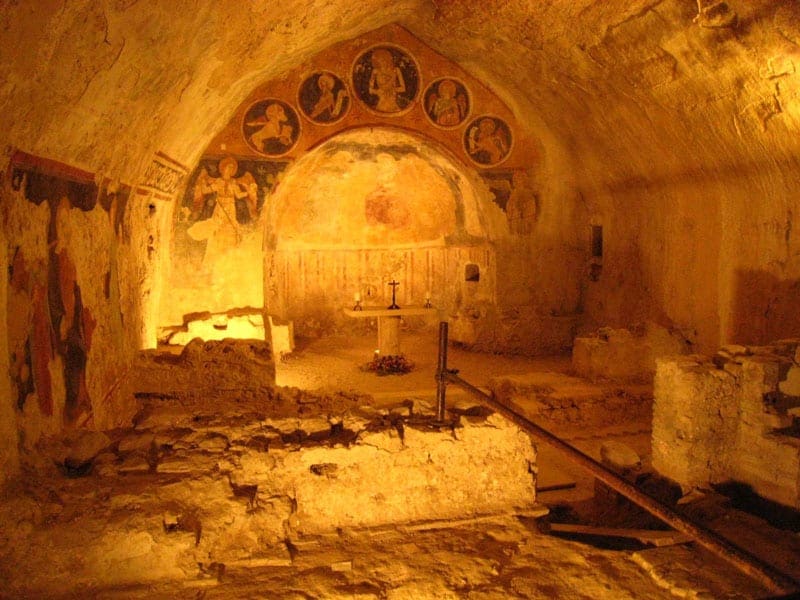
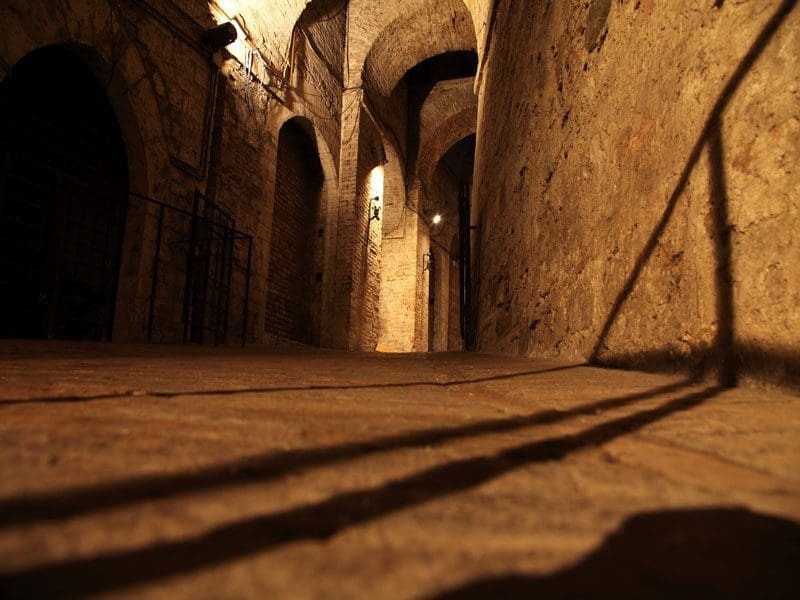
      In the afternoon there will be a guided tour of Perugia Underground, in the heart of the city a stone’s throw from the Duomo, offering the sense of a discovery through the centuries.

      Overnight

      THIRD DAY

      After breakfast, before returning to your destination, a suggestion is visit the Etruscan Well

      Our best offer is starting from €235,00 per person

      The price per adult includes:

      • 2 nights accommodation with breakfast
      • Orvieto CARTA UNICA for the whole family
      • Entrance at Città del Cioccoalto
      • Entrance at Perugia Underground
      • Europ Assistance travel insurance

      The fee does not include:

      • Extras, tips and offers
      • Meals
      • Means of transport
      • City tax where introduced by the Municipality of reference
      • Entrance at Etruscan Well in Perugia
      • Anything not expressly indicated in “the rate includes”

      Ask for information


        I have read and authorise the processing of my data in accordance with thePrivacy Policy

        I authorise the sending of commercial communications (optional)

        Gallery

        Discovering Trasimeno Lake

        Discovering Trasimeno Lake

        Starting from Euro 196,00 per person

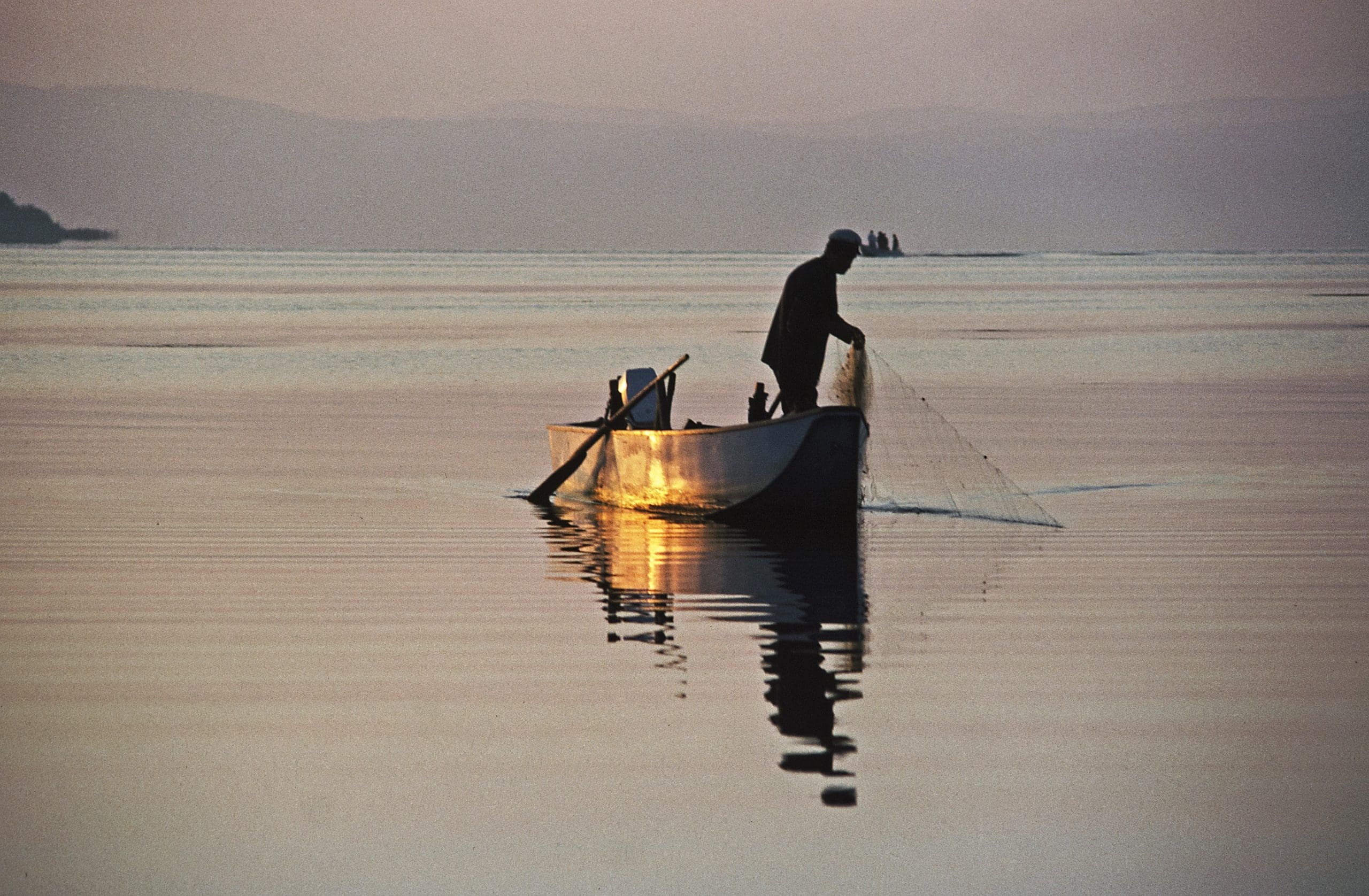
        A place of fun and entertainment in the Umbrian summers, Lake Trasimeno is a beauty to be discovered in every season. An area rich in legendary stories, gastronomic delicacies, ancient tractions and enchanting landscapes.

        1st DAY

        Arrival in the afternoon in the area of Lake Trasimeno. You will have the opportunity to discover some of the little gems of Lake Trasimeno. Panicale, walk in the village and visit: the Church of San Sebastiano, where the famous fresco of the “Martyrdom of San Sebastiano” by Perugino is kept, the historic Teatro Caporali, with an eighteenth-century structure, the Palazzo del Podestà and the Collegiate Church of San Michele Arcangelo.
        Overnight.

        2nd DAY

        Departure from Passignano Sul Trasimeno with the motor ship for Isola Maggiore, the only inhabited area that still retains the appearance of the fifteenth-century village created by fishermen. Guided tour of the island’s museum circuit which includes the Lace Museum, the Church of San Michele Arcangelo and the Documentation Center of Isola Maggiore.

        Free lunch.

        Return to the mainland in the afternoon and aperitif in the cellar.

        Overnight.

        3rd DAY

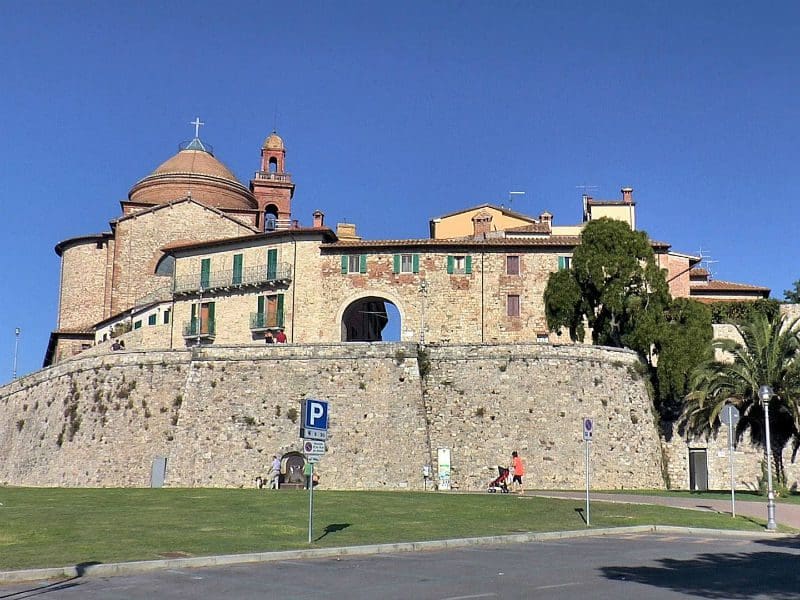
        After breakfast, on returning to one’s destination, a walk through Città della Pieve. Suggestive medieval town, birthplace of Pietro Vannucci known as Perugino.

        Our best offer is starting from € 196,00 per person

        The fee is per person and includes:

        • 2 nights in a double/twin room with breakfast
        • wine tasting
        • Boat trip to Isola Maggiore
        • Animation Isola Maggiore
        • Europ Assistance insurance

        The fee does not include:

        • Extras, tips and offers
        • Means of transport
        • City tax where introduced by the Municipality of reference
        • Anything not expressly indicated in “the rate includes”

        Ask for information


          I have read and authorise the processing of my data in accordance with thePrivacy Policy

          I authorise the sending of commercial communications (optional)

          Gallery

          Discover Umbria Underground With Us!

          Discover Umbria Underground With Us!

          Starting from Euro 199,00 per person

          An itinerary designed to let you discover some of the most beautiful underground cities in Umbria: Orvieto Narni and Perugia. Discover it with us!

          Underground cities, wells, cisterns and caves tell the story of a region from the Etruscans to the Middle Ages.

          These areas, now underground, had an important role in urban settlements in the past and reveal the origins of cities.

          Friday

          Arrival in Narni where history, art and a bit of mystery meet in the heart of the city in a unique itinerary, full of beautiful treasures: Narni Underground in the early afternoon 

          Free dinner

          Accommodation in the structure and overnight

          Saturday

          After breakfast thank to Orvieto card visit of  Orvieto Underground to discover the Pozzo di San Patrizio and the Pozzo della Cava. A journey to discover a millenary, surprising and unexpected “Underground City”.

          Free time.

          Overnight

          Sunday

          After leaving the structure on returning to one’s destination, continuing the leitmotiv of the proposed proposal, one moves to Perugia, where the underground route starts from the Rocca Paolina to get to admire the archaeological area under the Cathedral.

          Our best offer is starting from € 199,00 per person

          The fee per person includes:

          • 2 nights accommodation in double bed room with breakfast
          • Orvieto Carta Unica
          • Entrance to Narni Underground
          • Entrance to Perugia Underground
          • Europ Assistance insurance

          The fee does not include:

          • Extras, tips and offers
          • Means of transport
          • City tax to be paid on site (if applicable)
          • Anything not expressly indicated in “the rate includes”

          Ask for information


            I have read and authorise the processing of my data in accordance with thePrivacy Policy

            I authorise the sending of commercial communications (optional)

            Gallery

            The Legends of Saint Valentine

            The story of Saint Valentine of Terni is shrouded in mystery and folklore, with various legends intertwining over the centuries.

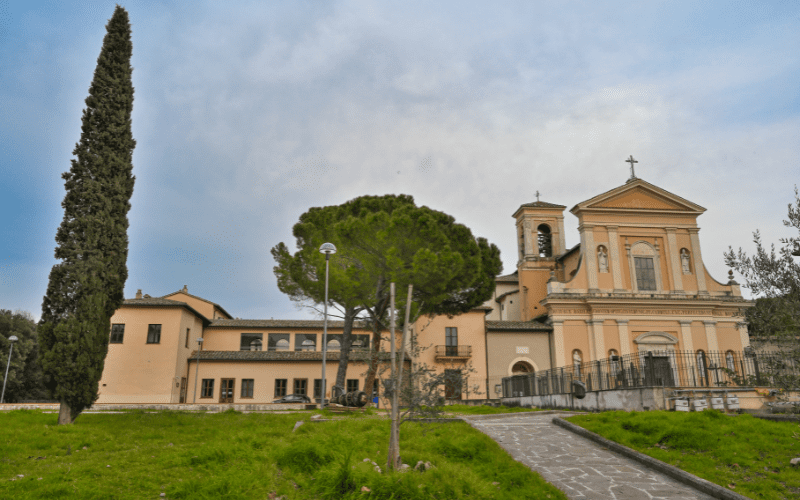
            Saint Valentine is revered as the patron saint of lovers, and his feast day on February 14th is celebrated worldwide. Valentine was a Christian bishop from Terni, who died as a martyr in Rome on February 14th, 273 AD. He was laid to rest in Terni, in the Basilica where his relics can still be found today.

            One of the most famous legends tells that Emperor Claudius II in the 3rd century AD had issued a decree that prohibited the marriage of young men, believing that singles made better soldiers. However, Valentine disobeyed this decree and continued to perform secret weddings for young couples. When his disobedience was discovered, Valentine was arrested and brought before the Emperor. During his imprisonment, legend has it that Valentine healed the blindness of his jailer’s daughter and that, before his execution, he wrote her a farewell letter, signing it “From your Valentine.”

            This story has helped to cement Saint Valentine’s association with romantic love. Another version of the Saint Valentine story suggests that he might have been martyred for aiding persecuted Christians during the reign of Claudius II. Yet another legend tells of Valentine witnessing two young lovers arguing and giving them a rose, urging them to hold it together as a way to reconcile, and then having doves fly around them, hence the term “lovebirds.” In any case, the figure of Saint Valentine quickly became a symbol of love and devotion, and his feast day became associated with romantic love over the centuries.

            Terni the City of Love and Steel

            Do you only have one day to visit Terni? We’ll give you more than one reason to come back!

            Morning: Art, history and flavors

            Start your day with a stroll through the historic center of Terni. Explore Corso Tacito, among shops and cafes, and stop at the Cathedral of Santa Maria Assunta, an architectural jewel that combines history and beauty.

            Continue to the Basilica of San Valentino, the patron saint of lovers. It’s a perfect place to discover a romantic and spiritual side of the city. Touch the tomb of the saint to bring home some luck in love.

            Stop at a typical trattoria and let yourself be won over by the flavors of Terni. Try the ciriole alla ternana, similar to strangozzi, they are seasoned with a simple sauce of garlic, oil, tomato and chili pepper., a game dish or a soup of lentils from Castelluccio.

            Never end the meal without tasting the dessert symbol of Terni, the Pampepato! A mix of dried fruit (walnuts, almonds, hazelnuts), honey, chocolate, cinnamon and pepper, baked in the oven.

            Afternoon: Nature and Wonder

            After lunch, head to the incredible Marmore Falls, one of the most exciting natural spectacles in Italy. Walk along the paths that lead to unique panoramic points and enjoy the spectacle of the waters plunging from 165 meters. Let yourself be enveloped by the magic of the sprays and, if you’re lucky, maybe even spot a rainbow. Check the opening times of the water so as not to miss the wow effect!

            Evening: Relax and magical sunset

            Conclude the day with a visit to Lago di Piediluco, a few kilometers from the waterfalls. This enchanted lake is perfect for relaxing and admiring a fairytale sunset. You can rent a boat or simply walk along the banks, immersed in tranquility. Treat yourself to dinner in a small restaurant on the shores of the lake. Try local fish dishes, such as royal perch, or a pizza accompanied by a good glass of wine. The reflection of the lake at dusk will be the icing on the cake of an unforgettable day.

            💚We are waiting for you in Umbria💚

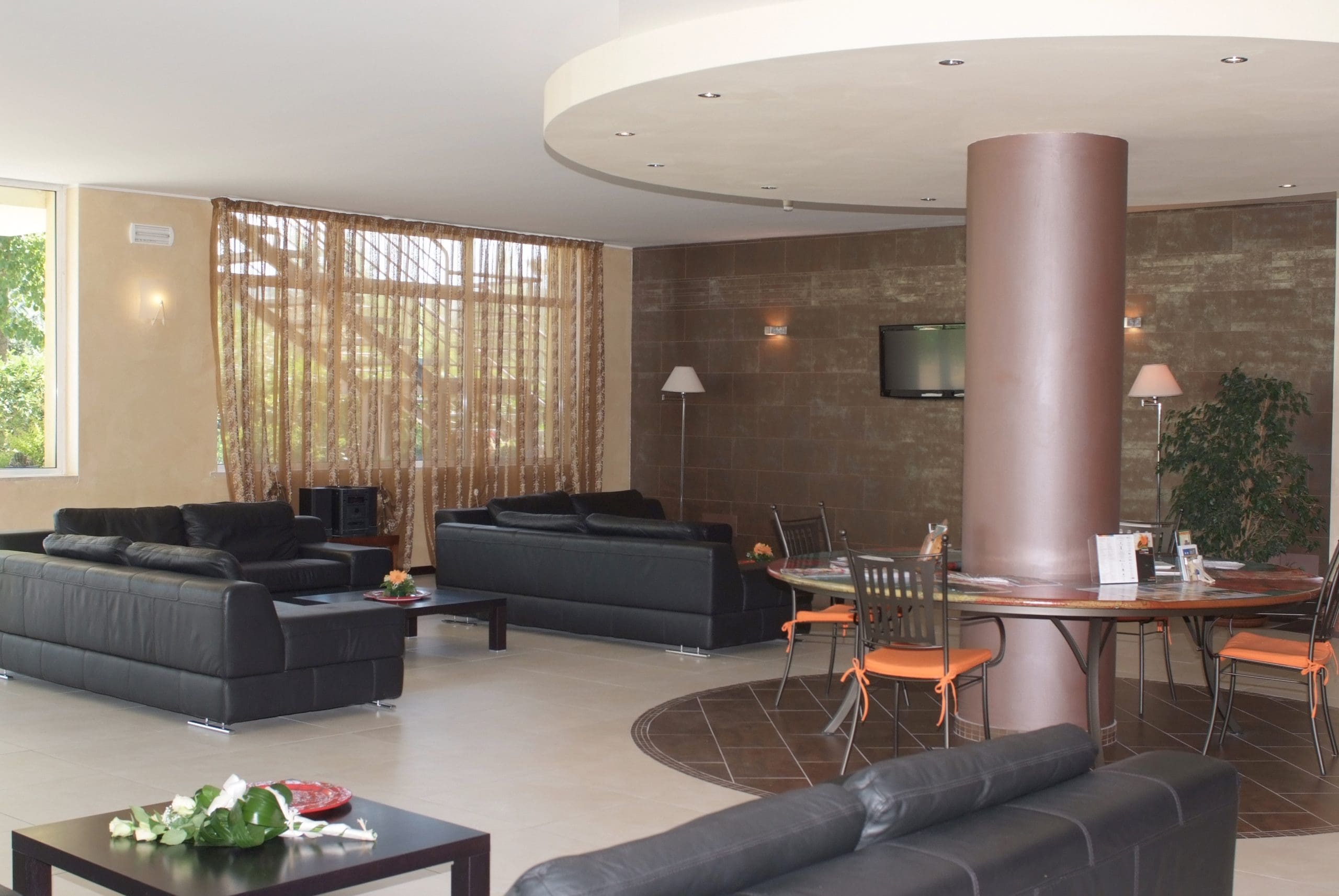
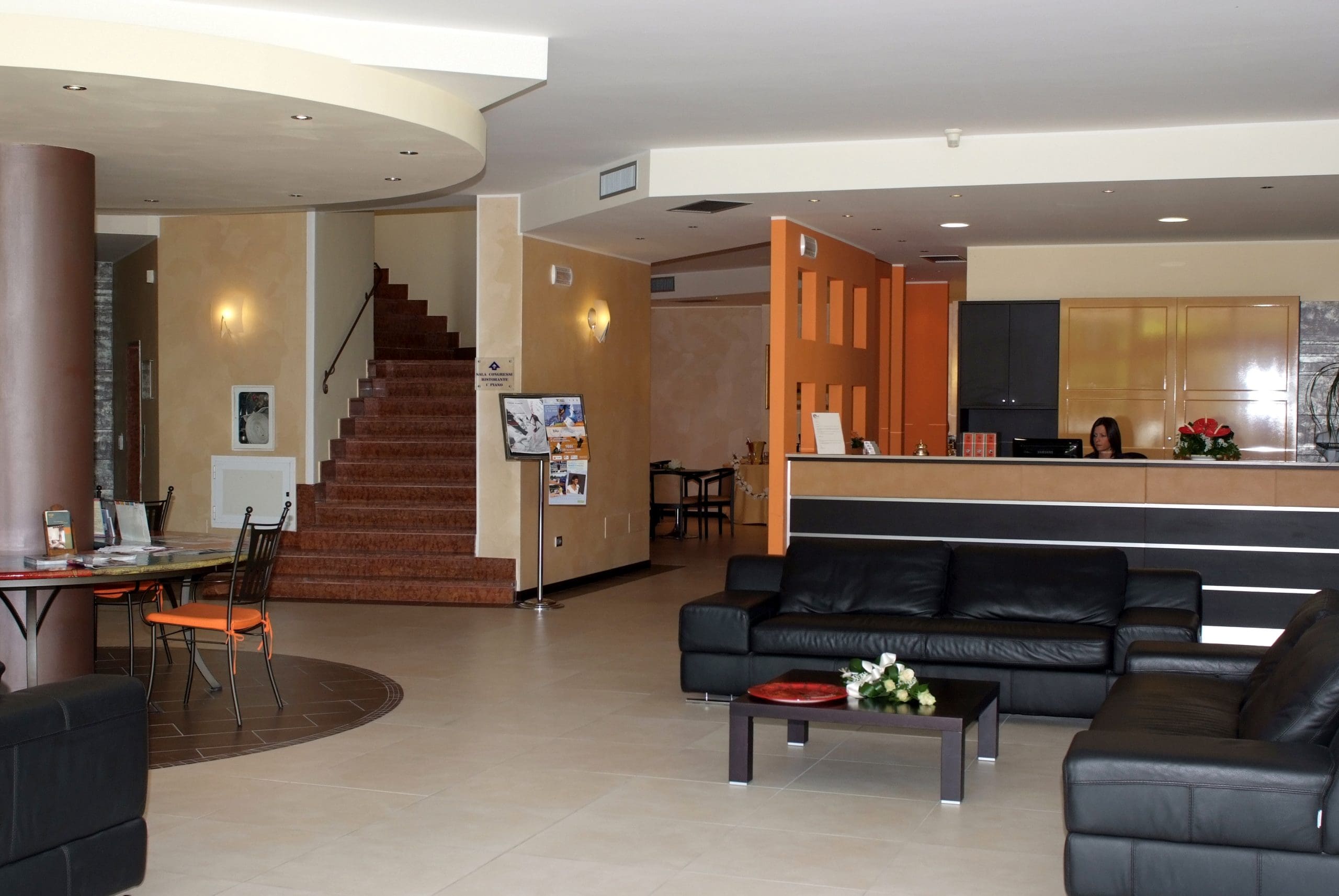
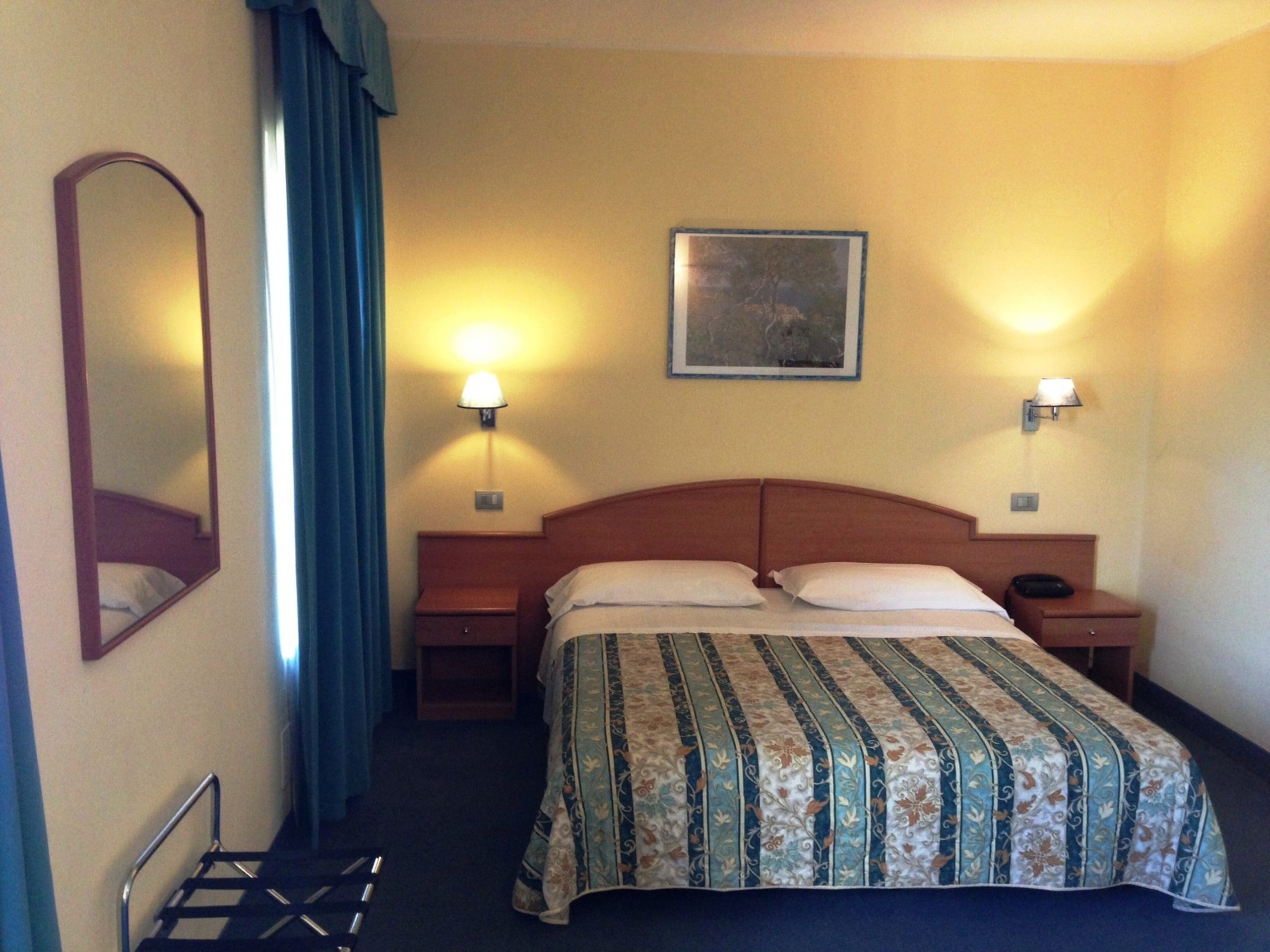
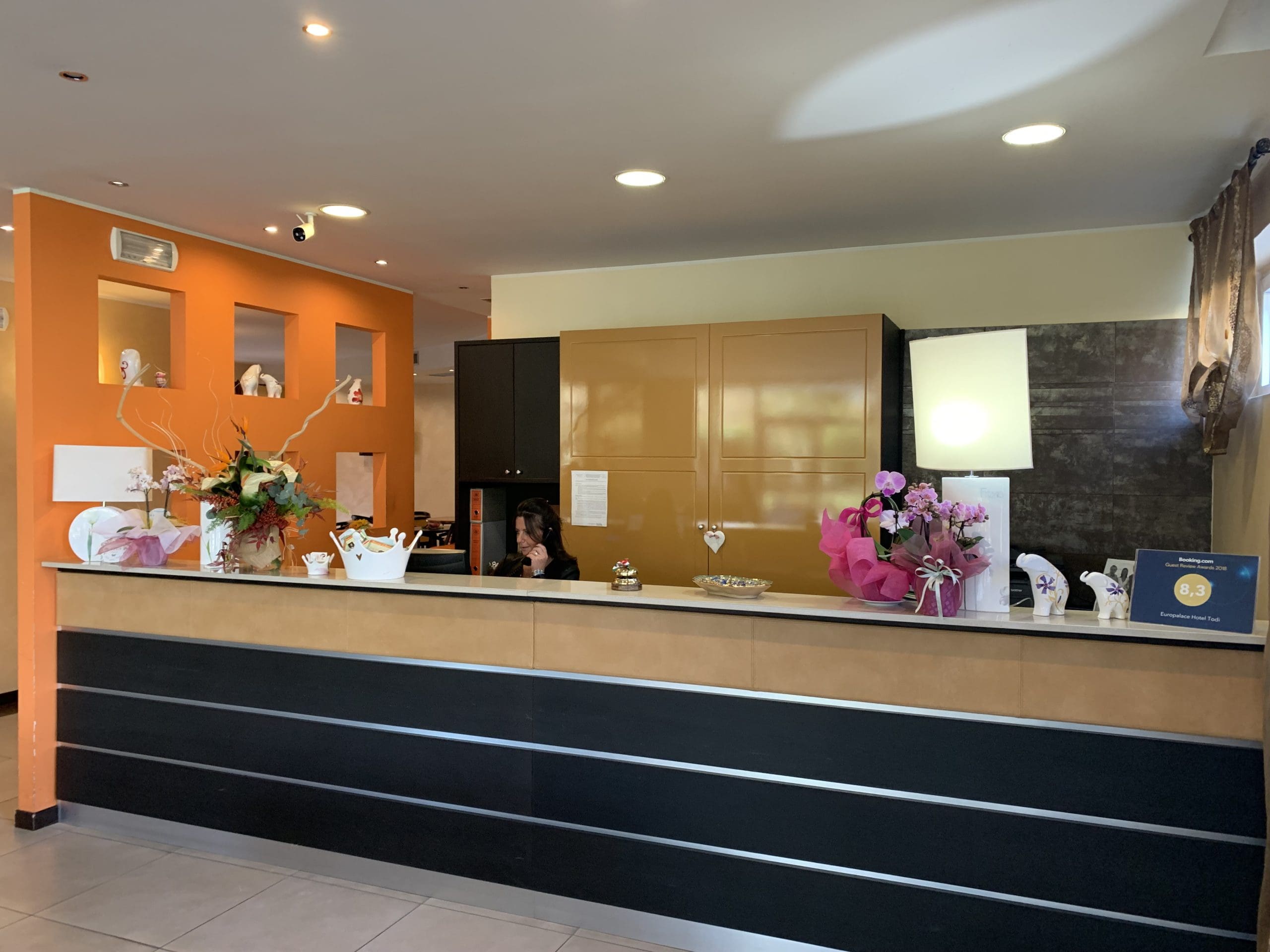
            Europalace Hotel

            Hotel Europalace

            Hotel Europalace – 4 Stars

            Todi (Pg)

            The Europalace Hotel is situated on the slops of Todi, just 5 minutes drive from the old center. It is designed to meet the needs of a pleasant business travel or a perfect meeting and is the right answer to your demand of comfort, privacy and efficiency.

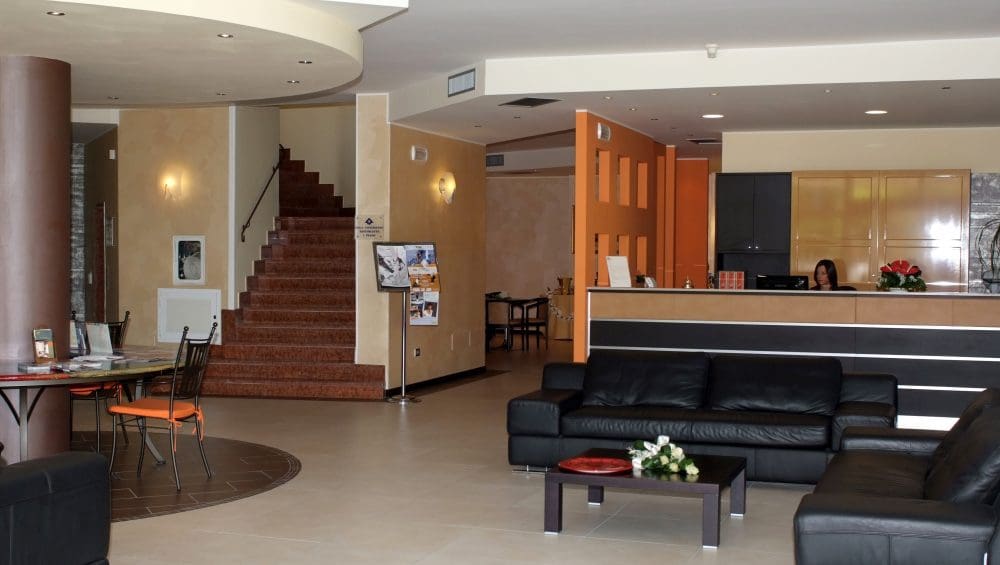
            The Hotel has an ample Free Parking for cars and coaches.  In the large, nice Hall there is Free Wi-Fi, and a lounge bar 24/7 open. First of all: HospitalityComfort and Relax.

            The Hotel has 72 rooms, divided into different categories: 8 “Single Rooms”55 “Standard Rooms”, 7 “Superior Rooms”and 2 “Family Rooms”. Each room is equipped with every comfort and offers the best services. Our qualified staff takes care of our guests 24/7.

            The sober and elegant furniture, consists of: air conditioning, TV color LCD, telephone and minibar according to the International standard.

            Services

            Accepting groups

            Air conditioning

            Bar

            Conference hall

            Disabled access

            Family room

            Gluten free

            Hair dryer

            Internet and Wi-fi

            Lift

            Minibar

            Parking

            Park/Garden

            Restaurant

            Small pets allowed

            TV - TV Sat

            Information request


              I have read and authorise the processing of my data in accordance with thePrivacy Policy

              I authorise the sending of commercial communications (optional)

              Map

              Gallery

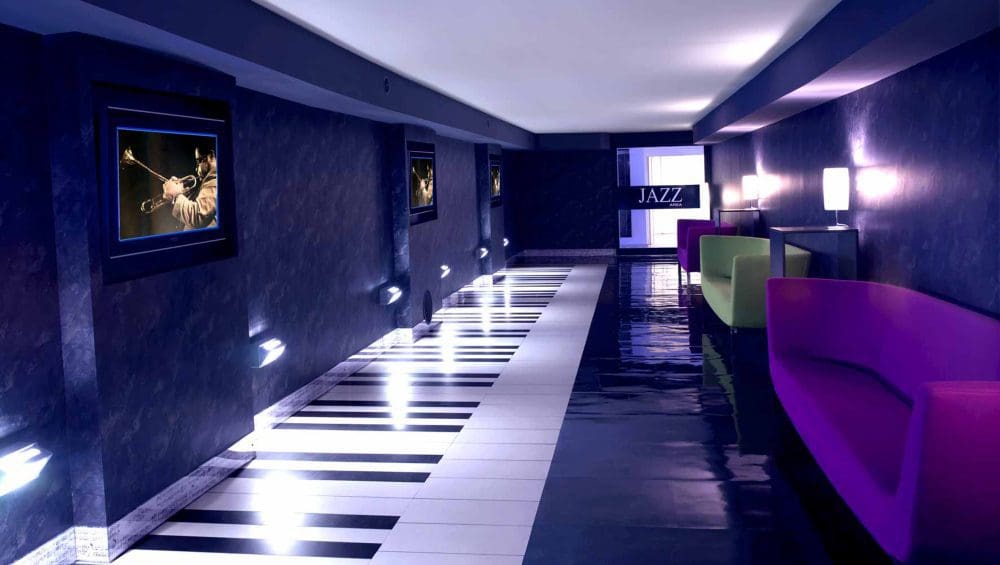
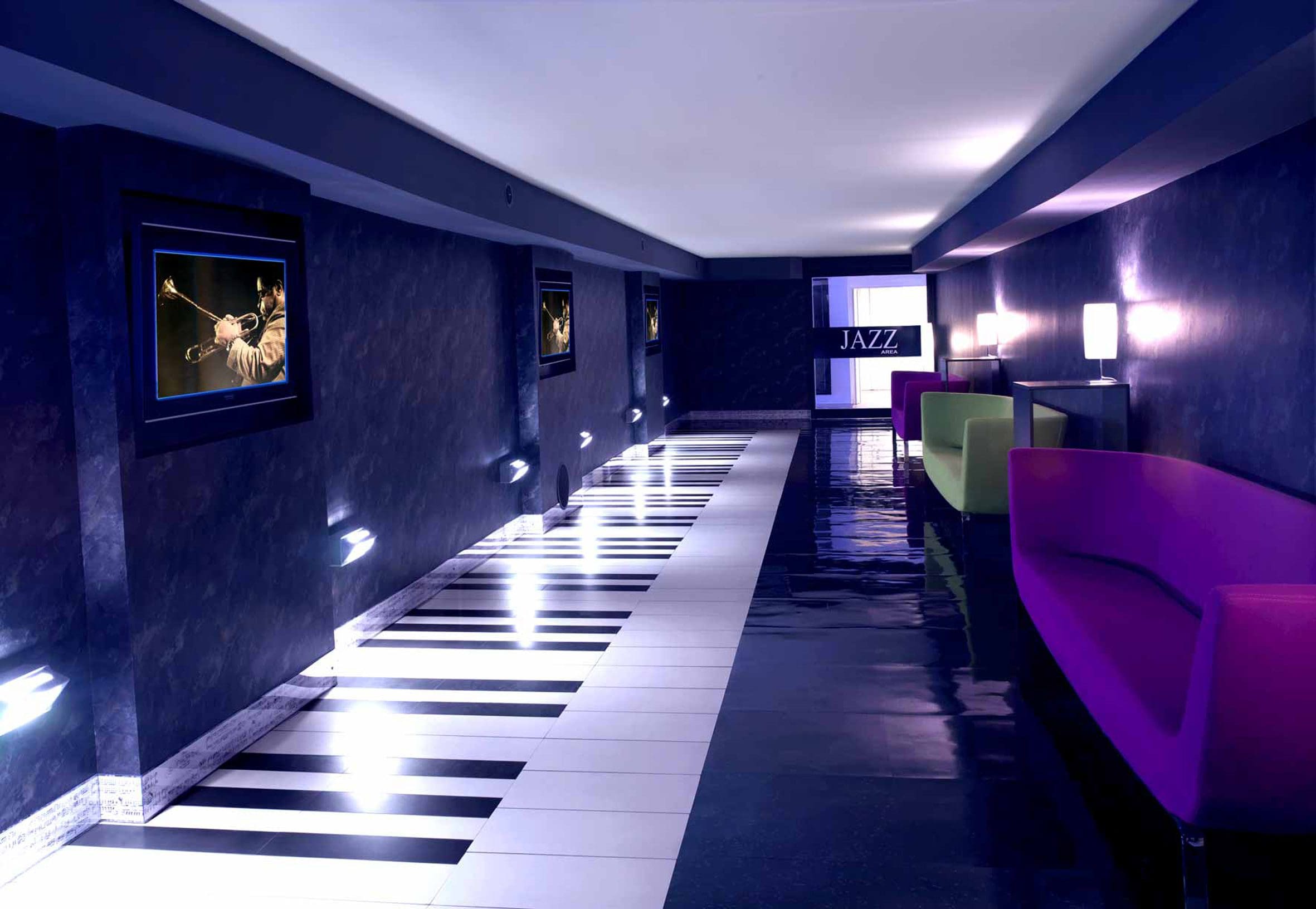
              Hotel Gio’ Wine e Jazz Area

              Hotel Gio' Wine e Jazz Area

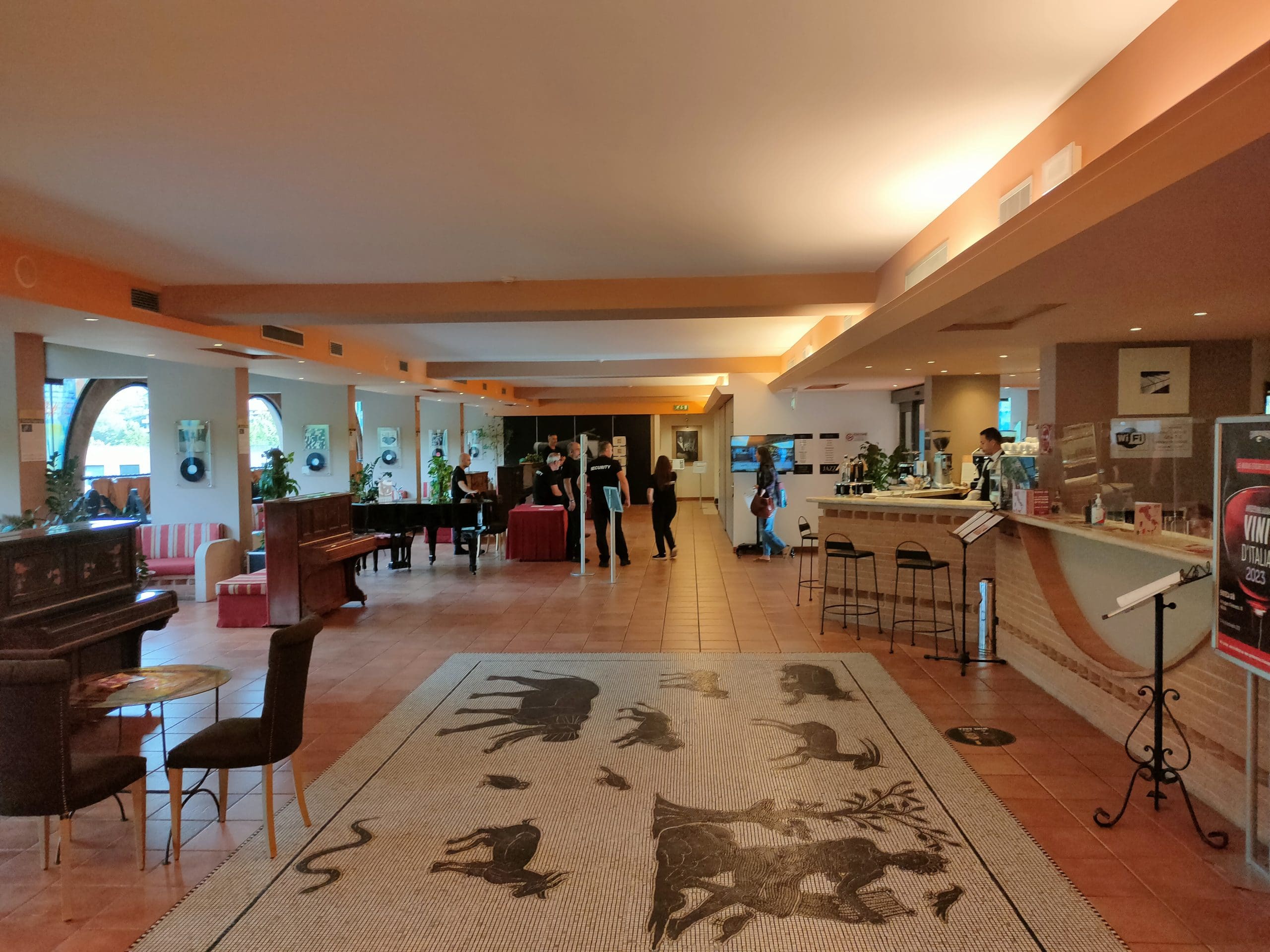
              Hotel Giò Wine e Jazz Area is a hotel divided into two theme areas, dedicated to Jazz and Wine. The Hotel is in the city centre of Perugia, 1 km far away from the railway station, and 200 mt from the minimetrò station. You reach the historic centre in 5 minutes by minimetrò.

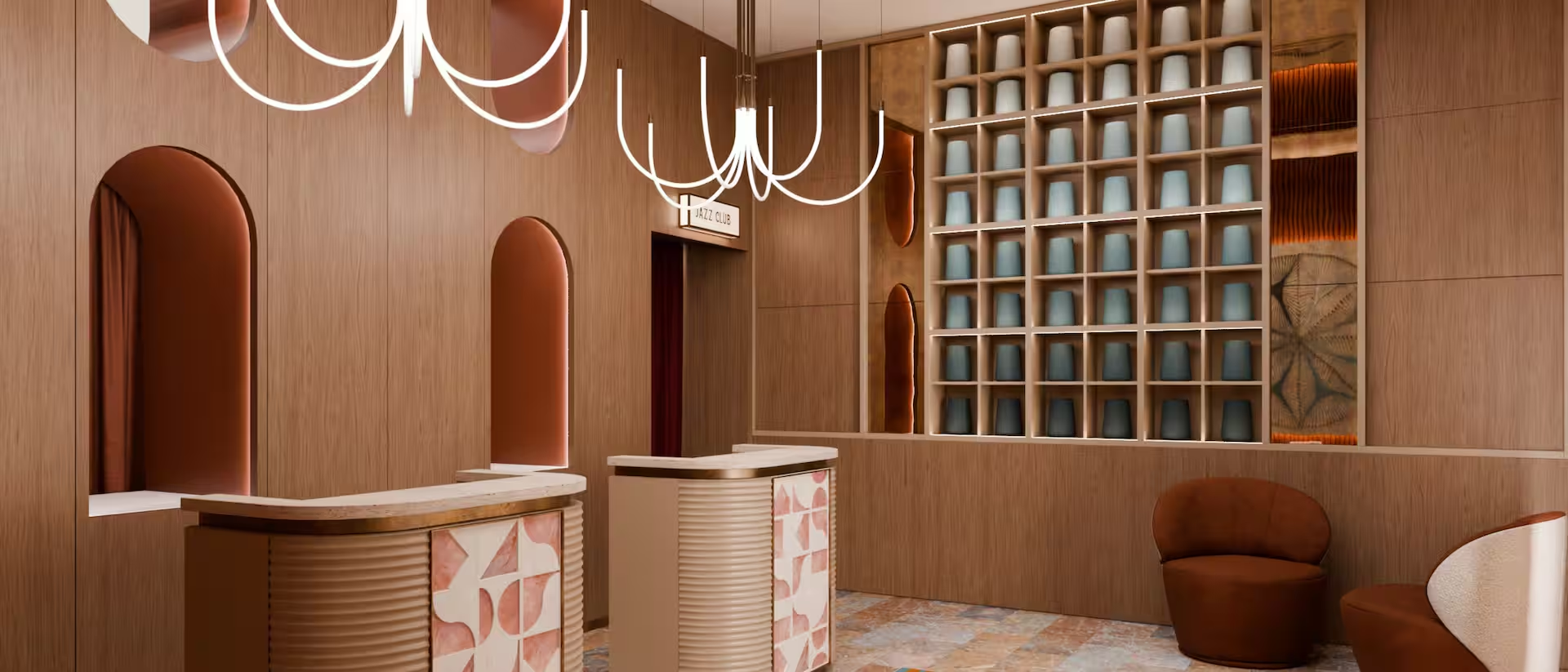
              From Hotel Giò Wine e Jazz Area you can reach the historic centre in 5 minutes by car or in 20 minutes on foot. In the Hotel jazz lovers will find an Auditorium with Jazz concerts in different dates.
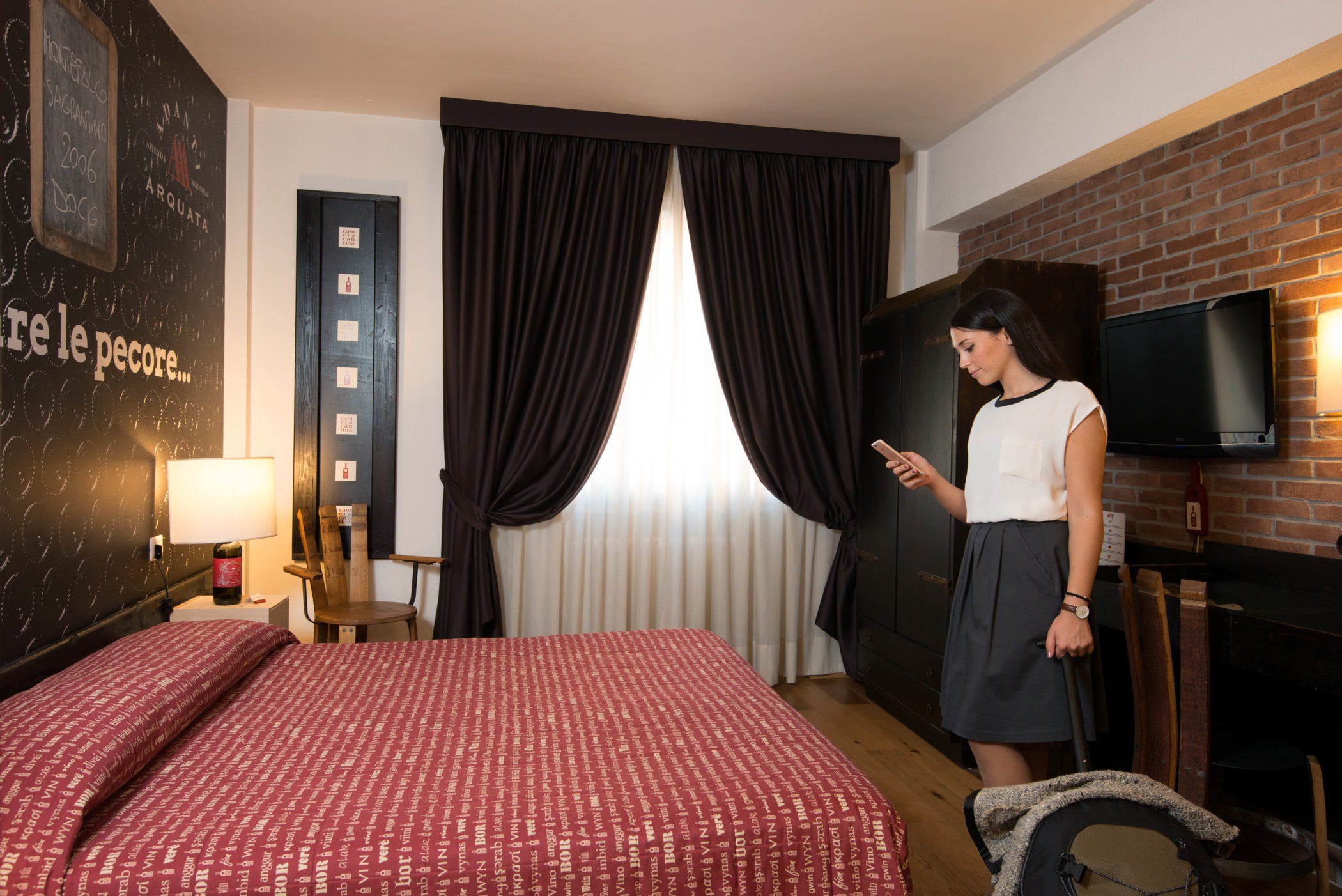
              The concept room CameraCantina® awaits you in the Wine Area of the Hotel, and it is dedicated to the world of wine. 

              33 CameraCantina® in the Wine Area, unique, emotional rooms, that remind the colours and the atmospheres of the cellars. 

              97 Wine Rooms 97 in the Wine Area are dedicated to wine and host, inside them, the “scri-vi-nie”, wine desks, that exhibit the wines selected by Enoteca Giò Arte e Vini. 

              76 rooms in the Jazz Area are equipped with a CD player and a Jazz compilation, some have a massage chair, other a Jacuzzi.

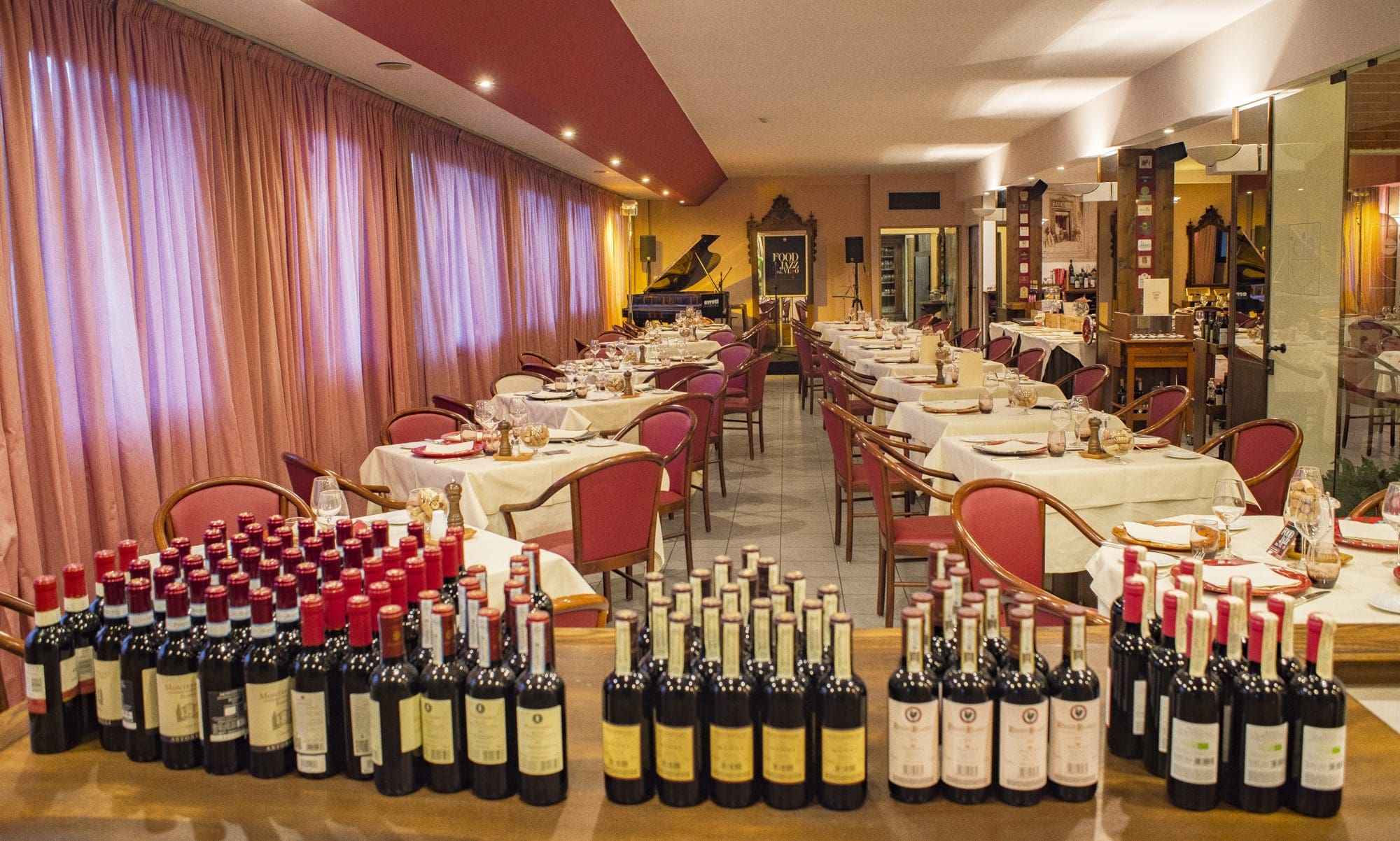
              Restaurant Enoteca venue for the Italian Cooks Alliance Slow Food Umbria and Convivium AIS (Italian Sommelier Association). Michelin guide awarded the restaurant in 2017 with the logo “the plate”.
              An outer vineyard with relax corners, free Internet Point and free Wi-Fi in the whole hotel. 

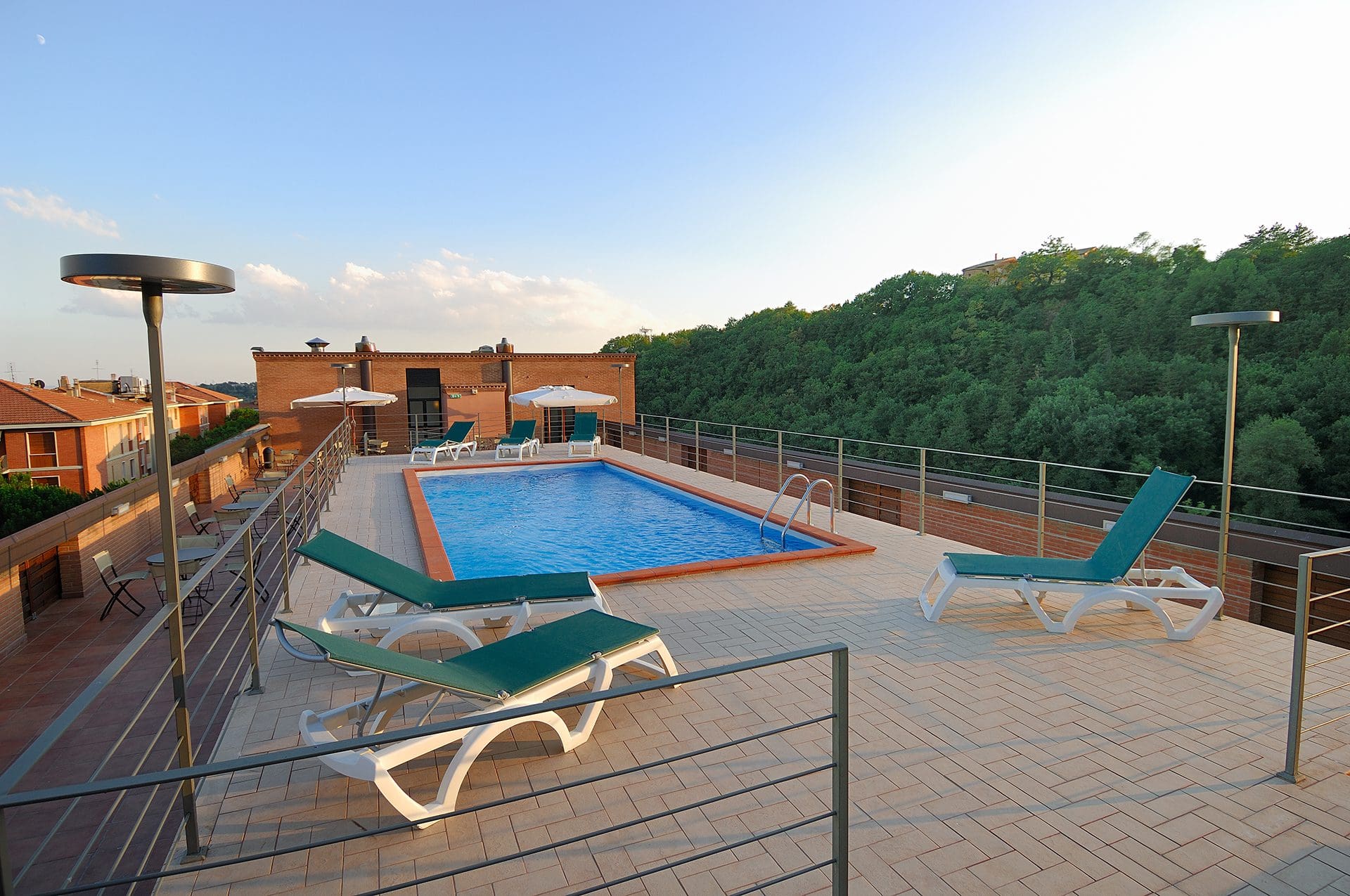
              For the fitness lovers an internal gym and an outer swimming pool on the roof with solarium. Parking up to 700 places.

              Services

              Disabled access

              Accepting groups

              Small pets allowed

              Air conditioning

              Lift

              Hair dryer

              Bar

              Safe deposit box

              Swimming pool

              Solarium

              Minibar

              Garage

              Gym

              Parking

              Gluten free

              Internet and Wi-fi

              Park/Garden

              Restaurant

              Conference hall

              TV - TV Sat

              Information request


                I have read and authorise the processing of my data in accordance with thePrivacy Policy

                I authorise the sending of commercial communications (optional)

                Map

                Gallery